
Which Wall Skirting Is Best for Your Dubai Home?
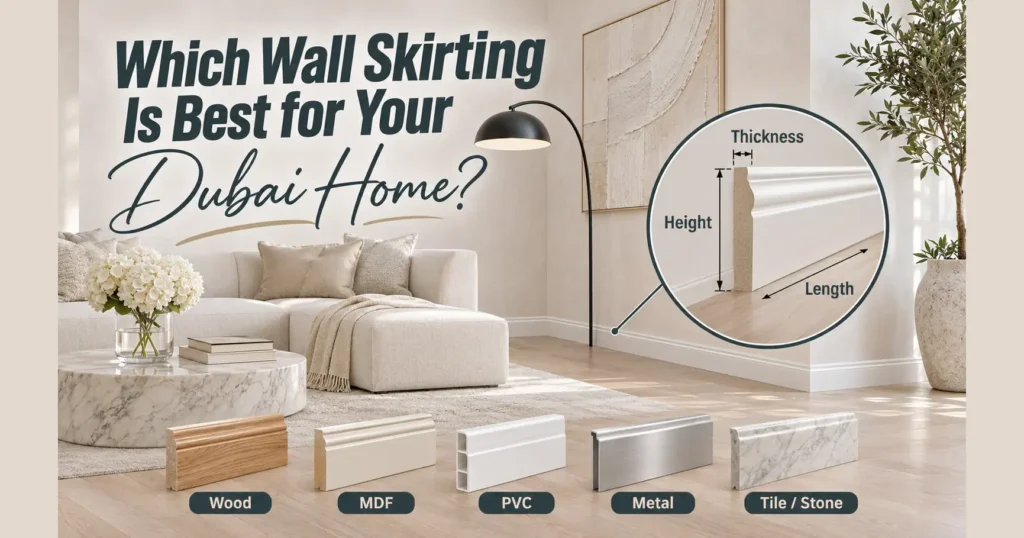
Skirtings are used to hide wall imperfections and gaps where the walls meet the floor. From classic wooden profiles to modern flush designs, having the right skirting can elevate your home interior decor. Many homeowners use them to give their space clean edges, which is why finding the best wall skirting for Dubai home interiors matters.
You can use skirting with wooden, laminate, or tiled flooring. It helps you save your walls from bumps, scratches, or scuffs. In this guide, Wall Cladding Panels provides detailed information about the materials and purpose of wall skirting.
What Is Wall Skirting?
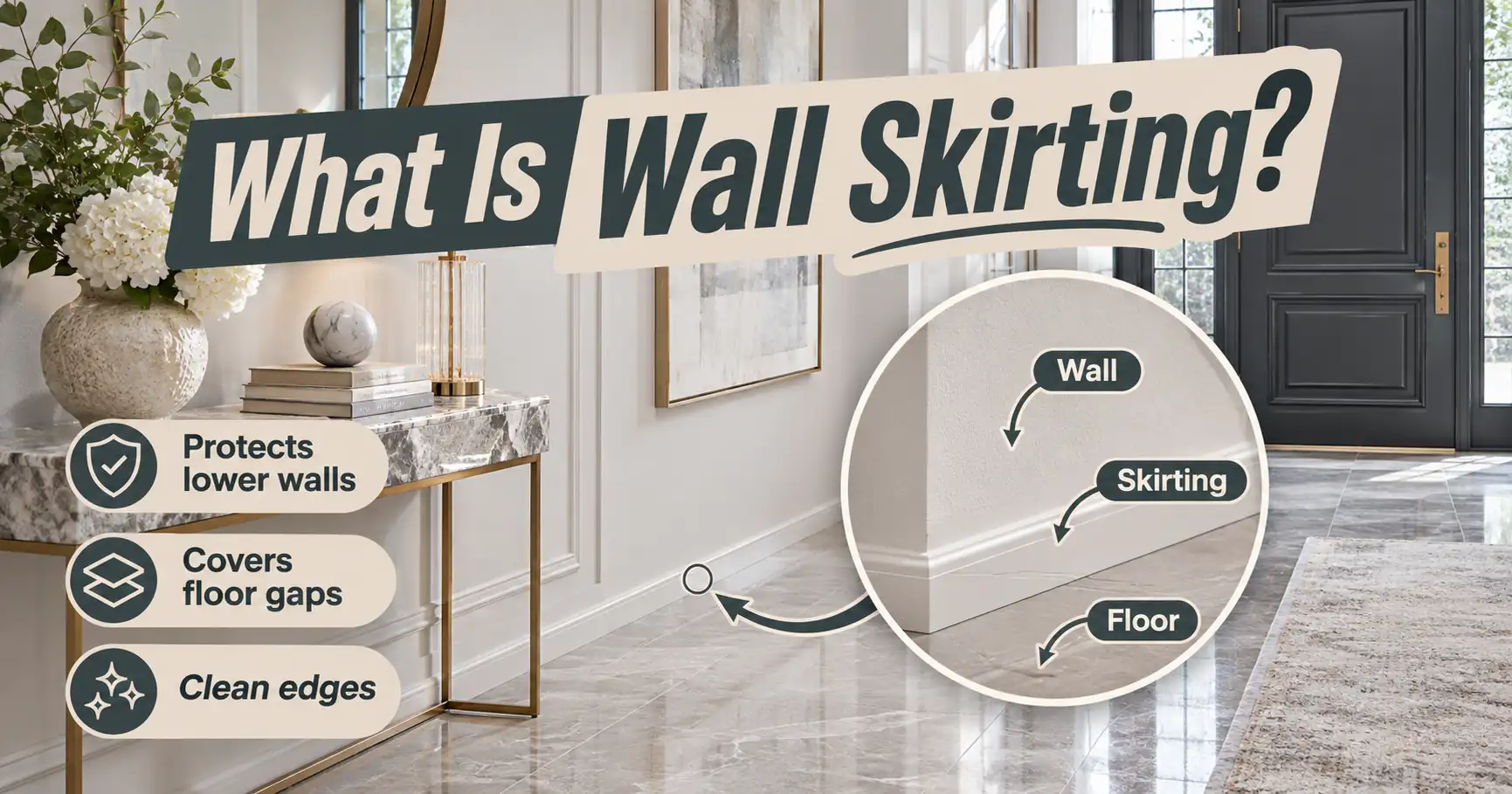
Wall skirting is a narrow strip that is placed along the bottom of an interior wall where it meets the floor. It is also known as baseboards or skirting boards. The purpose of wall skirting is to protect floor-to-wall joints from furniture scuffs and everyday wear.
Wall skirtings are available in different material options, designs, and sizes. It is made from durable materials. Finding the right size, design, and profile depends on your floor type and the overall interior style.
What Are the Most Common Types of Wall Skirtings in Dubai?
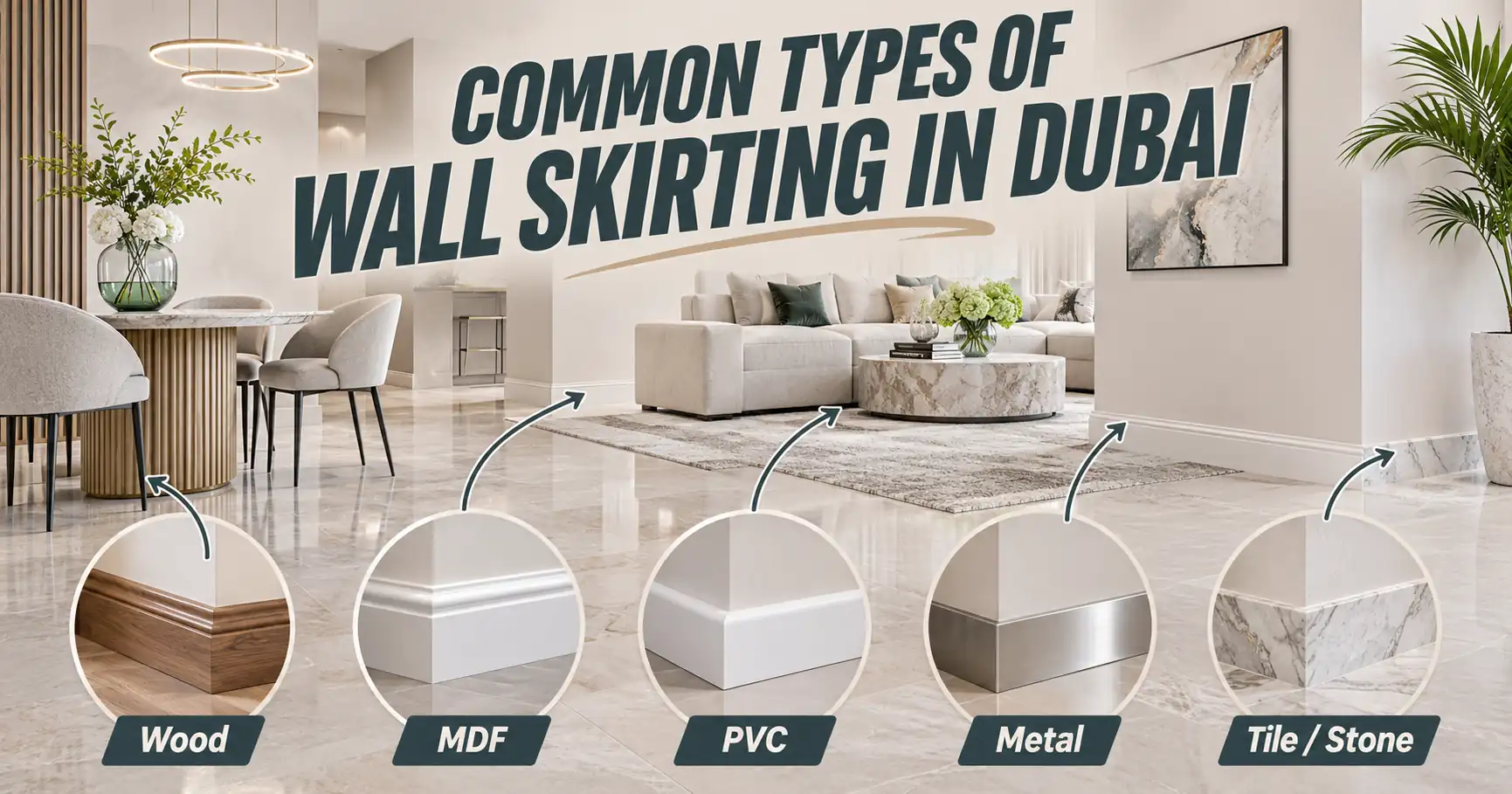
Wall interior decor styles are changing enormously, from sleek styles to minimalist trends. Nowadays, people are looking for modern and contemporary designs that merge very well with their wall decor. Wall skirting is available in various materials, designs, and shapes. Each material provides exclusive durability. Here are the common types of wall skirting:
Wooden Skirting
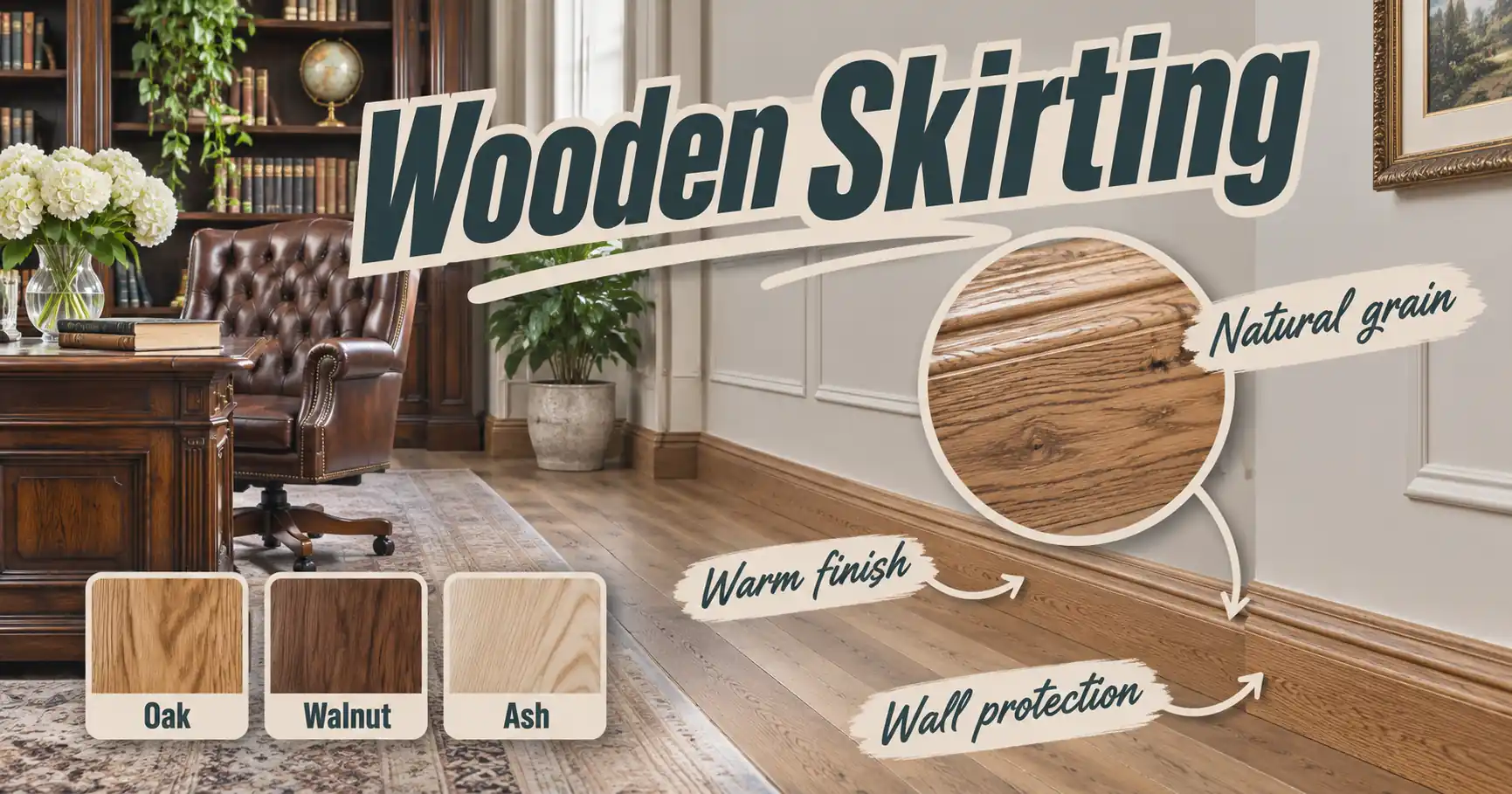
Wooden skirting gives your space a natural and warm appeal. It protects the lower section of your walls from daily wear. You can use it with both traditional or modern interior designs. It hides the gap between the wall skirting board and the wall.
Skirting made of real natural wood acts as a barrier against impact, scratches, mop marks, and furniture scuffs. For customized skirting, you can choose from wooden types including oak, sapele, tulipwood, walnut, ash, beech, and pine.
MDF Skirting
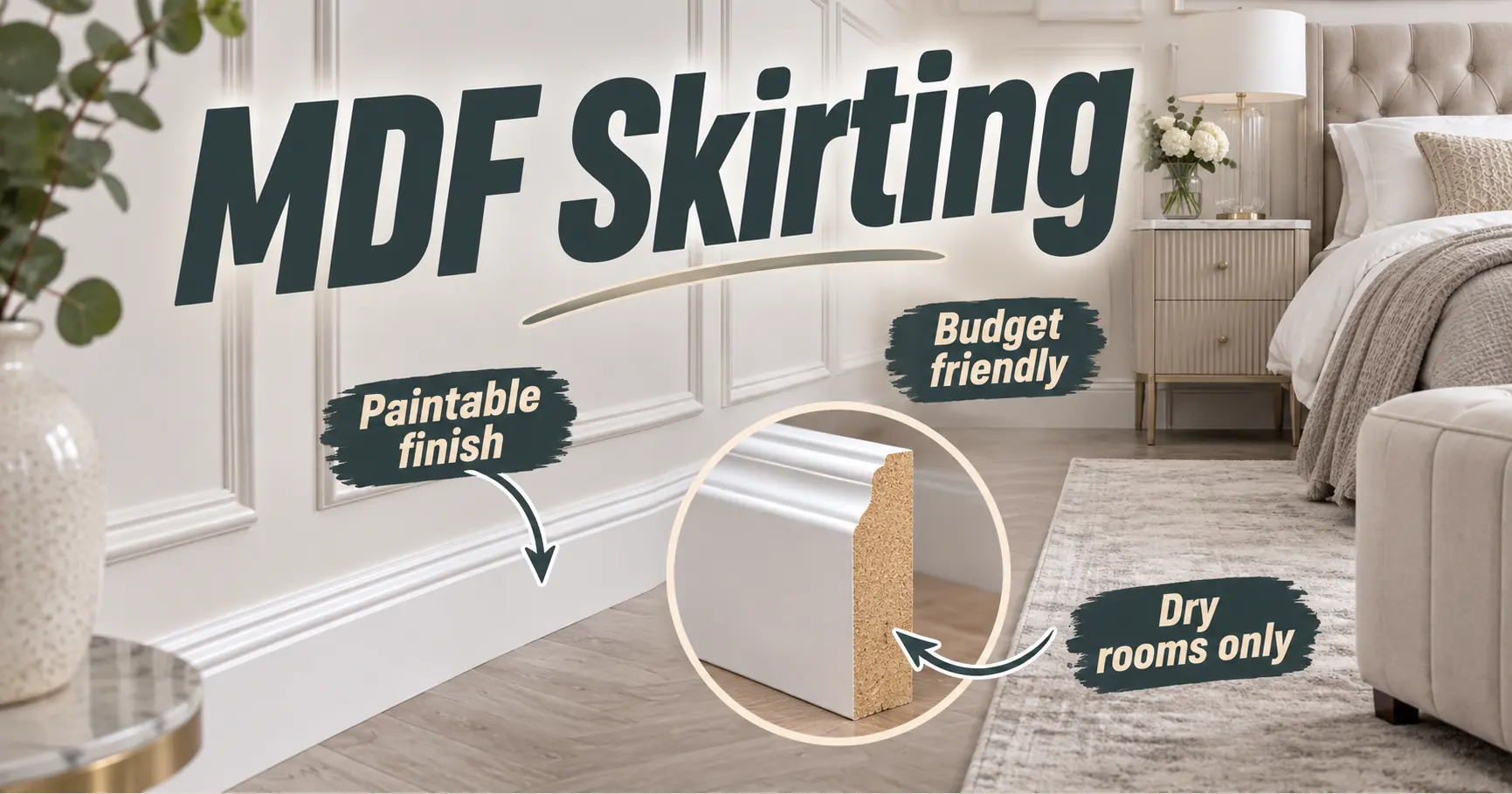
It is the most commonly used wall skirting in Dubai homes. It is smooth, resist wrapping, and is easy to paint. MDF wall skirting is a more affordable and versatile option for modern interiors. You can easily paint MDF wall skirting profiles to match your wall or furniture decor.
It is the perfect choice for bedrooms, living rooms, and other dry indoor areas. Avoid using it in wet areas, as the standard MDF skirting can absorb water quickly, swell, and fall apart.
PVC Skirting
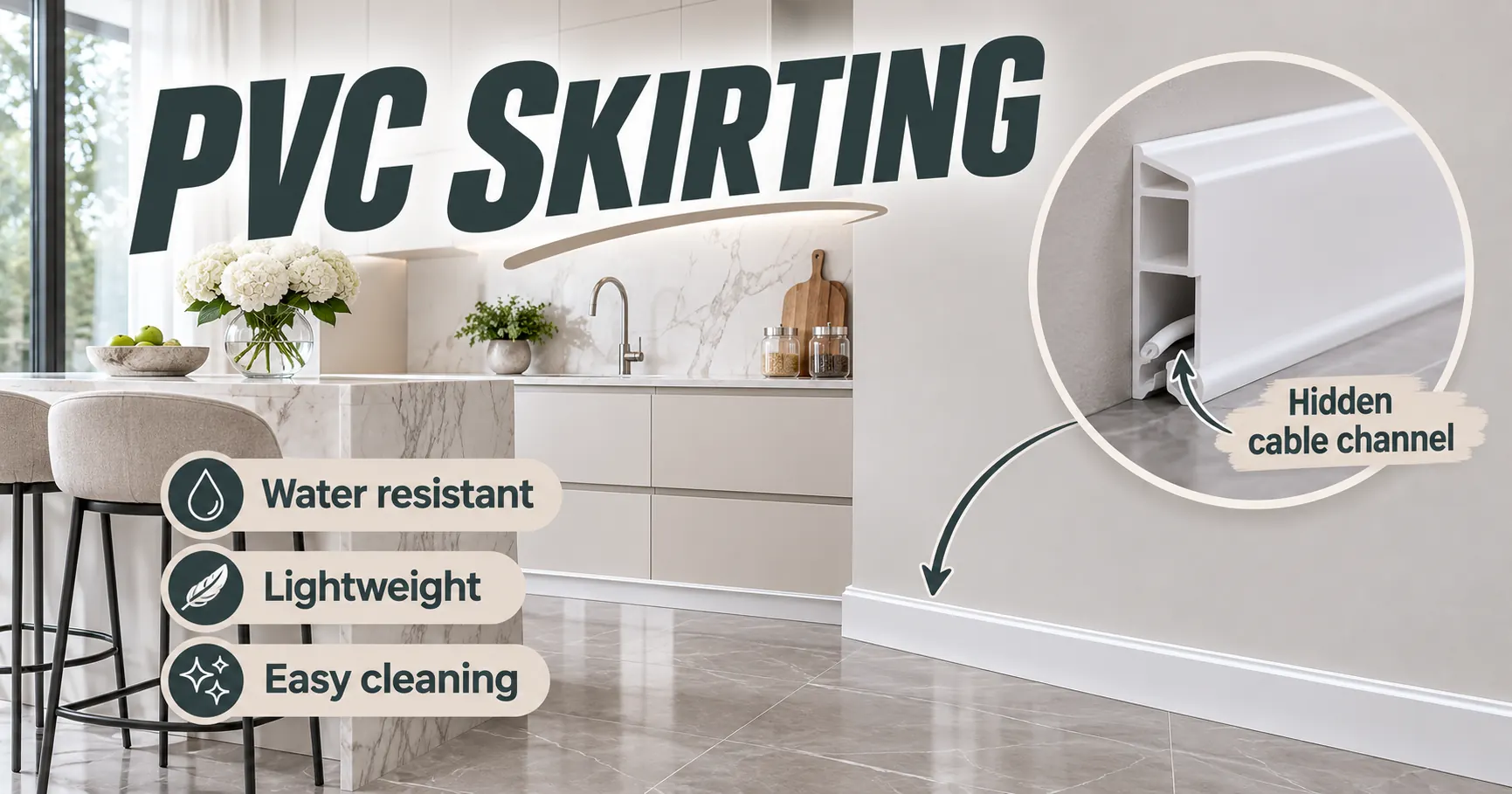
These skirting profiles provide high durability and water resistance. Plastic-based wall skirting is light in weight and a budget-friendly option for your home interiors. These skirtings do not need heavy nails or screws and are very simple and easy to install.
Just regular maintenance makes it durable and maintains a fresh appeal. You can install them in bathrooms, kitchens, or other moisture-prone areas. You can tuck messy cables behind the board for neat finishes.
Metal Skirting
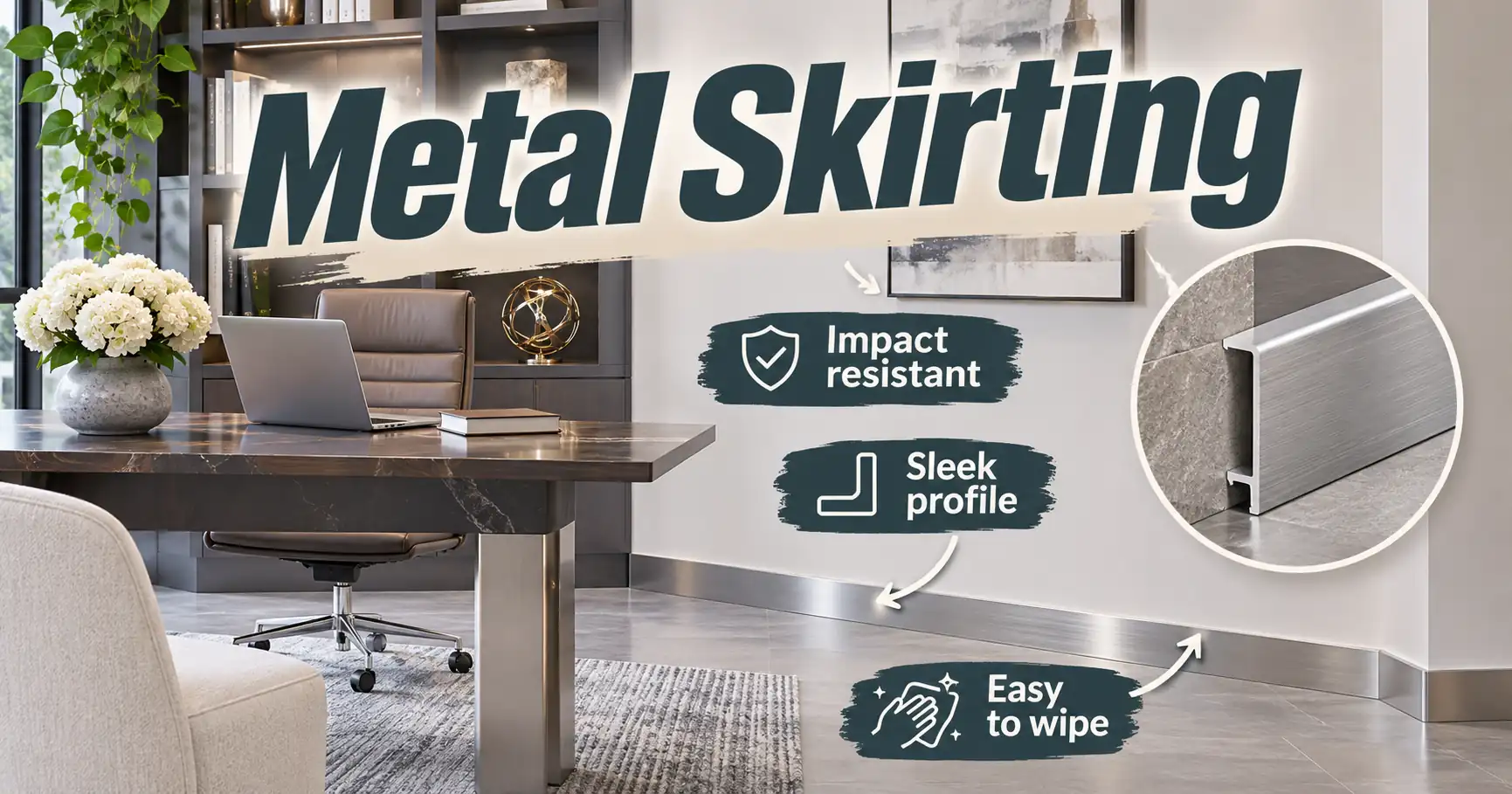
Metal wall skirting offers superior durability and protects your lower walls from heavy impact and pests. Metal is non-flammable. It can not catch fire easily or help in spreading flames. However, metal skirting does not require painting or sanding. A simple wipe with a mild damp cloth can keep it clean. It gives a sleek and minimalist look to your contemporary spaces.
Tile/Stone Skirting
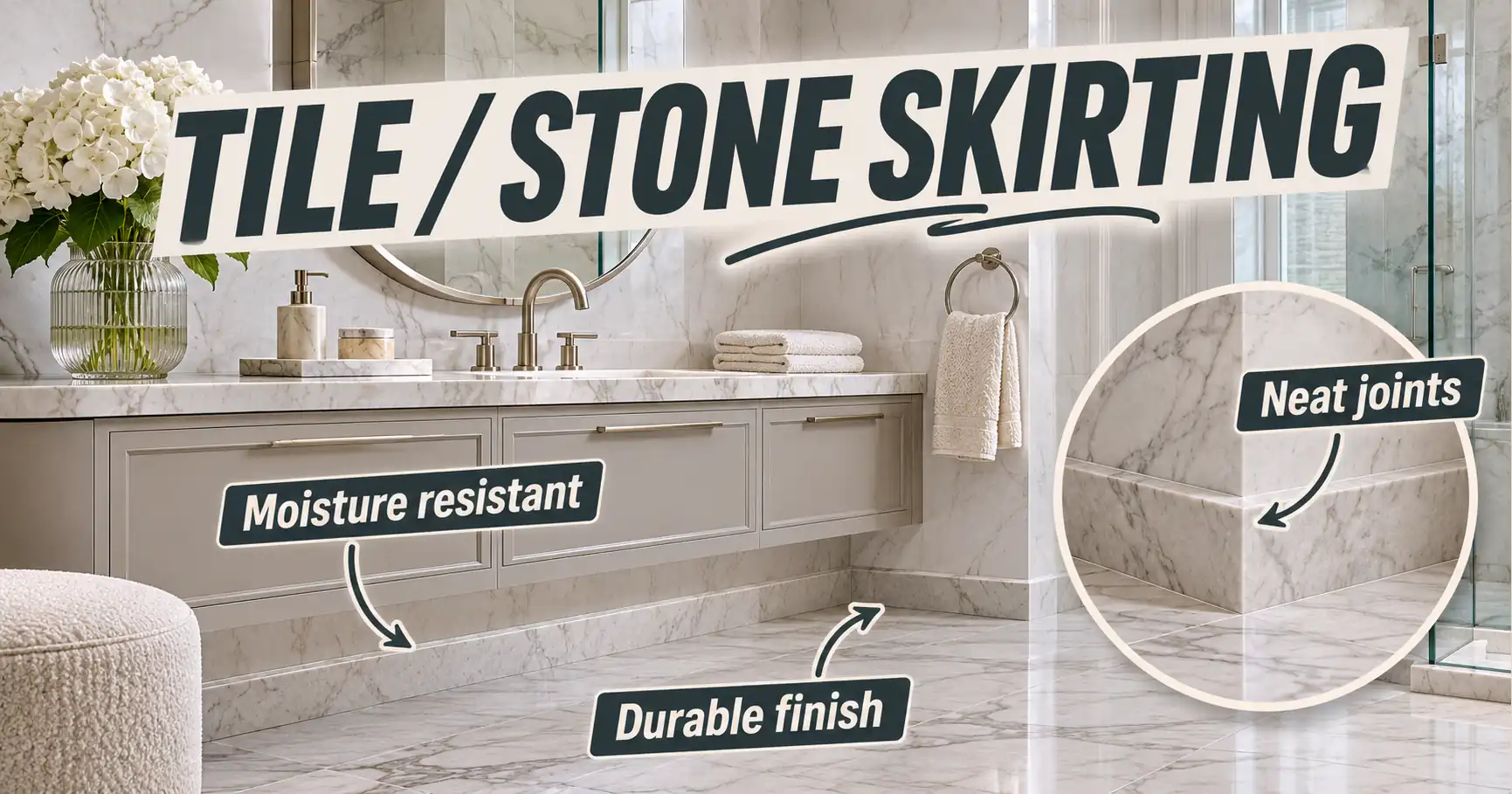
Tile and stone skirting provides excellent lower wall protection. It creates neat finishes between wall and floor joints. These tiles cover the construction or expansion gaps. It prevents dust buildup, warping, or swelling from humidity. Tile and stone skirtings are resistant to moisture, humidity and withstand Dubai’s harsh weather. It saves you from intensive cleaning routines.
| Skirting Type | Best Space | Look and Finish | Watch Out For |
|---|---|---|---|
| Wooden skirting | Living rooms and bedrooms | Warm, natural wood tones | Scratches and moisture |
| MDF skirting | Dry indoor rooms | Smooth, easy to paint | Swelling in wet areas |
| PVC skirting | Bathrooms and kitchens | Light, clean and simple | Choosing a thin profile |
| Metal skirting | Modern and high-traffic spaces | Sleek and minimalist | Dents from heavy impact |
| Tile/stone skirting | Humid or high-use areas | Neat, matching floor finish | Harder to replace later |
How to Choose the Right Wall Skirting?
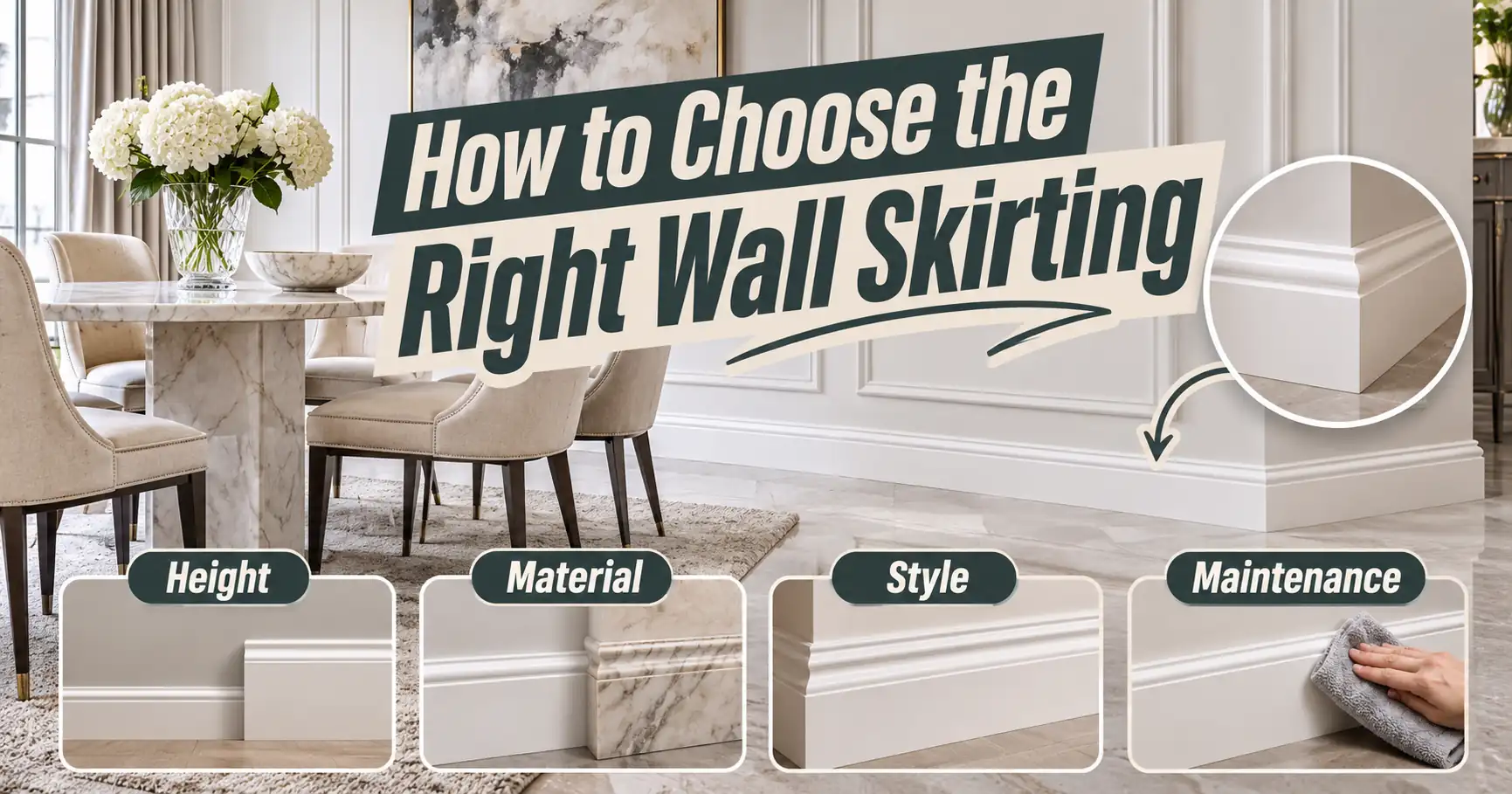
Choosing the right wall skirting depends on your flooring type, home decor, and functional requirements. For different flooring types, there is a huge selection of materials and designs for your Dubai Home. To make a reliable choice in wall skirting, first consider these factors:
Select Height

Wall skirtings come in different height varieties. To get the wall skirting height accurate, first consider your overall wall decor, wall height, and proportion.
- For low ceilings, install short skirting
- For high ceilings, choose taller skirting boards
- For Small rooms, avoid bulky designs.
Choose the Right Materials
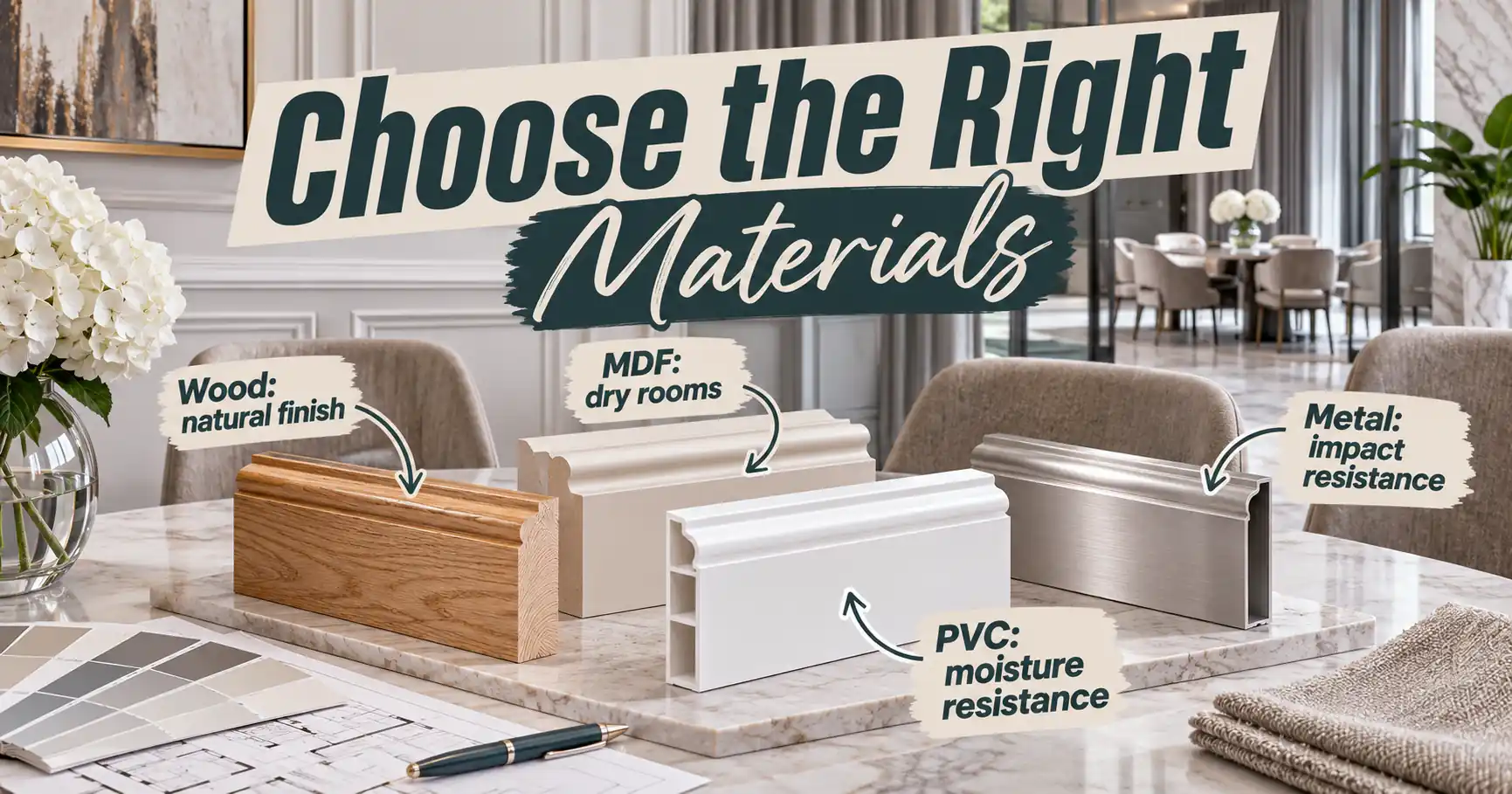
Choosing the right material comes with various challenges. While browsing the materials, make sure to select one that fits your functional needs, cleaning routine, and room decor.
- Wood gives your space a touch of elegance
- MDF is an affordable choice. It only works with dry living areas.
- PVC resists water, is lightweight, and is easy to clean.
- Metal is highly durable and impact resistant.
Match the Style
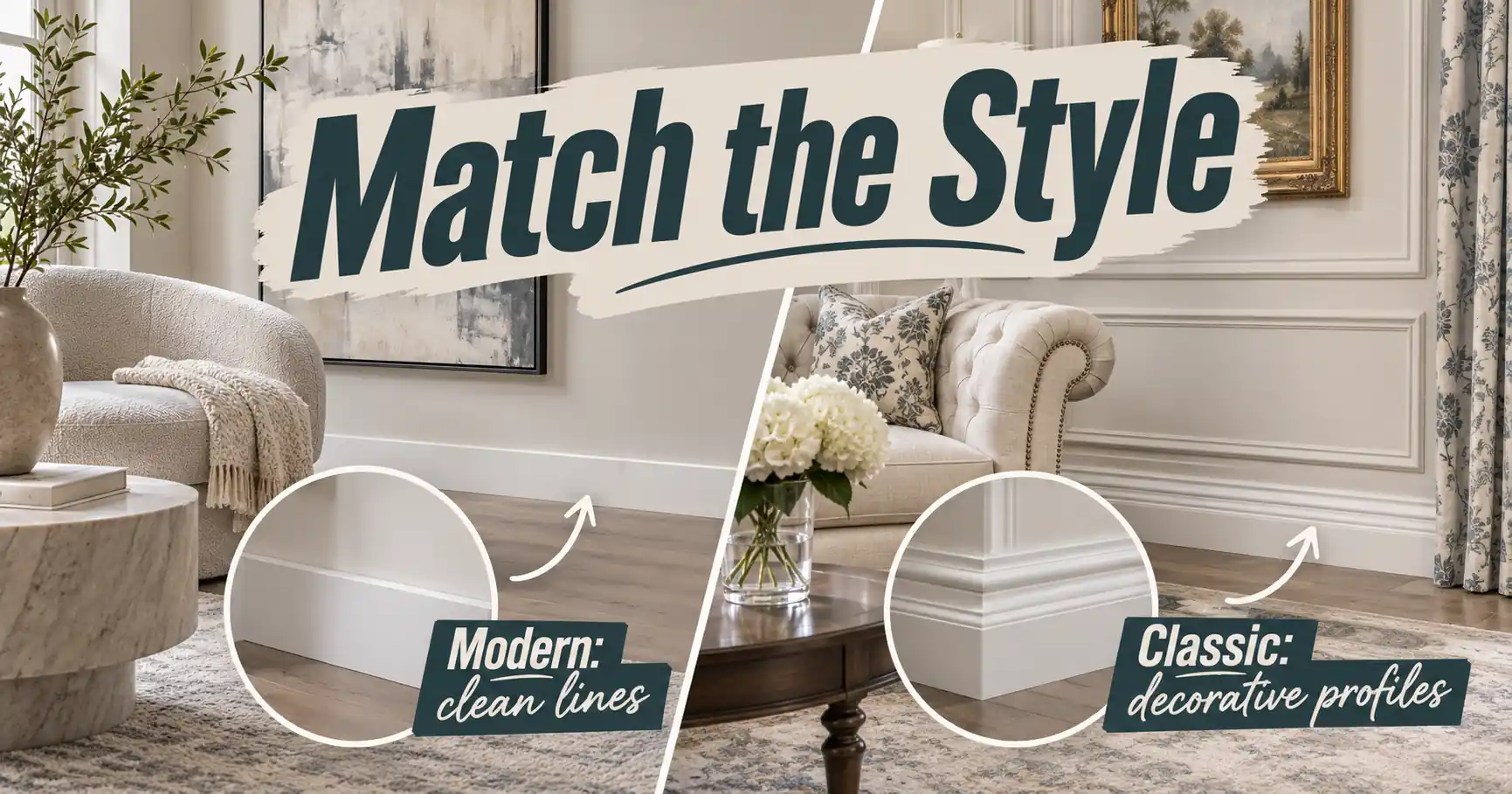
You can select from a range of simple, flat designs and decorative shapes. For a matching style, make sure to inspect your room decor needs and also consider your personal preferences.
- Modern profiles suitable for minimalist interiors in Dubai
- Decorative designs of wall skirtings complement the traditional interiors.
Consider Maintenance Requirements
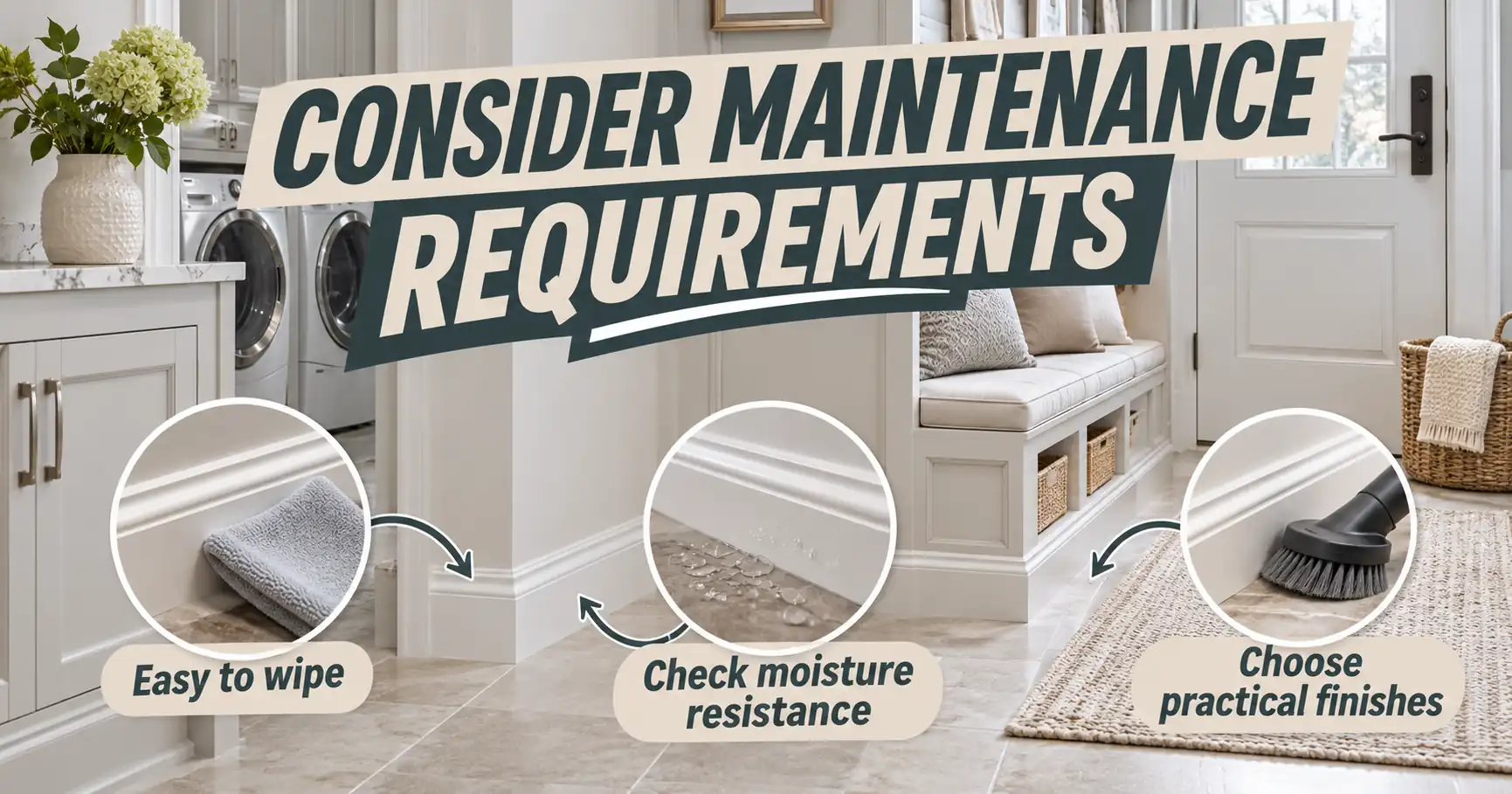
Different materials or designs need different levels of care & maintenance. Always look for a finish that is easy to clean and suits your space’s daily use. Some tile materials are resistant to moisture, dust, and humidity. While others can swell in moisture and fade easily in sunlight.
Installation and Care Tips for Wall Skirtings
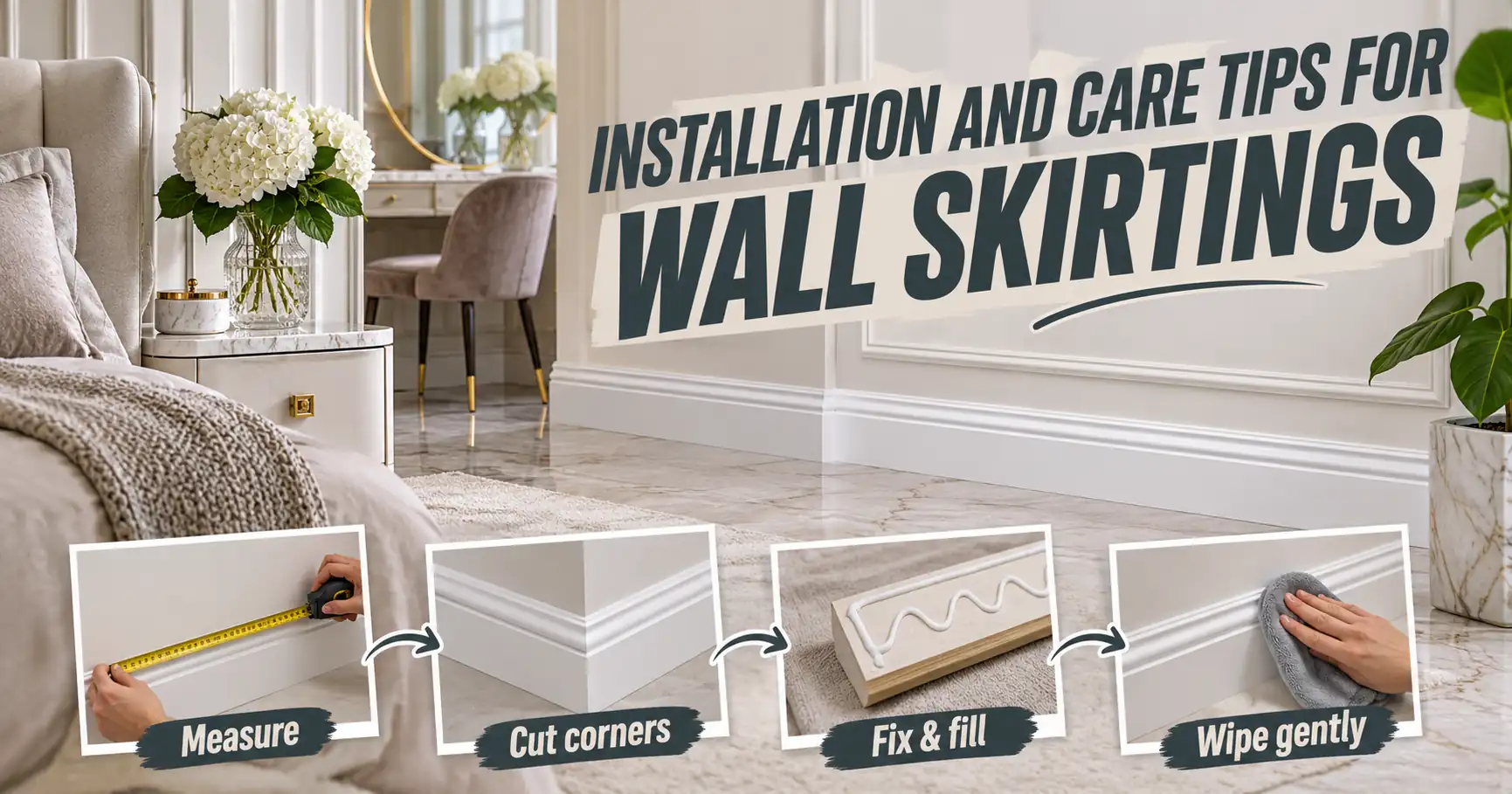
Measure your wall dimensions accurately. Then use a miter saw to cut the skirting boards inside and outside corners at a 45-degree angle. Before attaching the boards, first prepare the wall surface, then apply strong grip adhesive to the back of the skirting. Press the boards against the wall firmly. After that, use wood filler or matching fillers to seal any gaps or holes at the joints.
The wall skirting profiles do not require harsh cleaning. Just regularly wipe them clean with a vacuum soft brush attachment or with a microfiber cloth. Clean the spills quickly to prevent slipping or staining.
Common Mistakes to Avoid
Many homeowners do not understand the importance of skirtings and make numerous mistakes while choosing one.
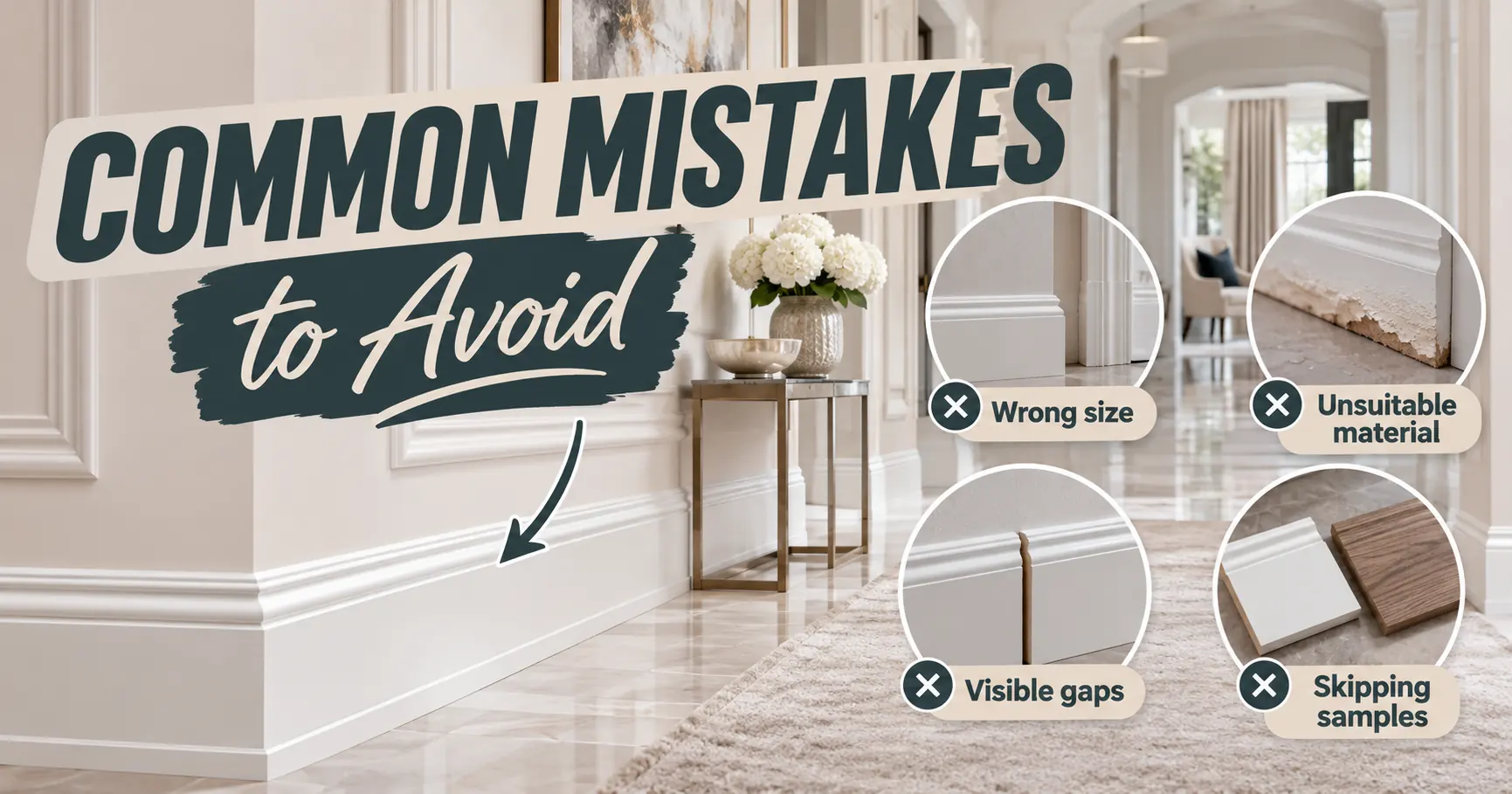
- Choosing the wrong sizes, like too narrow or too high, can leave ugly spaces where dust collects and disturb the whole decorative vibe of your space.
- Choosing unsuitable materials for your place can cause you costly loss. Such as, installing MDF in bathrooms directly leads to damage or swelling of the skirting from moisture.
- Poor installation makes cleaning difficult, and visible gaps minimize the stunning appeal of your place.
- Ignoring the overall style of your space while choosing wall skirting creates a messy, disjointed visual effect.
- Direct purchasing without asking for material samples can lead to great misunderstandings. Because wood tones and finishes look different in person or different in pictures.
Frequently Asked Questions | FAQs
1. Are Skirting Boards and Baseboards the Same?
They both refer to the same thing and have the same purposes. But Skirting Boards are commonly used in British English, while Baseboards are commonly used in American English. Both are narrow strips installed on the lower bottom of walls where the floor meets. It protect your lower walls from furniture scuffs, scratches, and mopping marks.
2. Can a Room Have Walls Without Skirting?
Yes, a room can have walls without skirting. Many modern interiors use a sleek finish where walls meet floors without any visible skirting. However, ensuring a careful finish is crucial. It helps in avoiding exposed edges and gaps.
3. Does Skirting Cover Flooring Expansion Gaps?
Skirting boards are specifically designed to cover flooring expansion gaps. They create a neat and clean finish. Skirting boards hide small gaps that are deliberately left between the floor and walls. It let materials like laminate, wood, or vinyl expand with temperature changes naturally.
4. Can Wall Skirting Prevent Damp?
Wall skirting helps in protecting the lower part of your walls from moisture and humidity. It can not prevent dampness completely. For better finishing, use moisture resistant materials like PVC or stone skirting in humid areas.
5. Is Skirting the Same as Wall Panelling?
Skirting and wall panelling are not the same. However, they are often used together in a room. Skirting is the narrow strip attached to the bottom of the wall. Wall panelling consists of slats or panels that cover a large part of a wall. They both give walls a sleek finish and protect them from damage.
6. Why Do Gaps Appear Between Skirting and Walls?
Gaps appear between skirting and walls for several reasons, including uneven wall surface, poor installation, or bad-quality adhesives. Some materials can expand or contract due to temperature and humidity changes. This creates small gaps over time between the skirting and the walls.
Conclusion
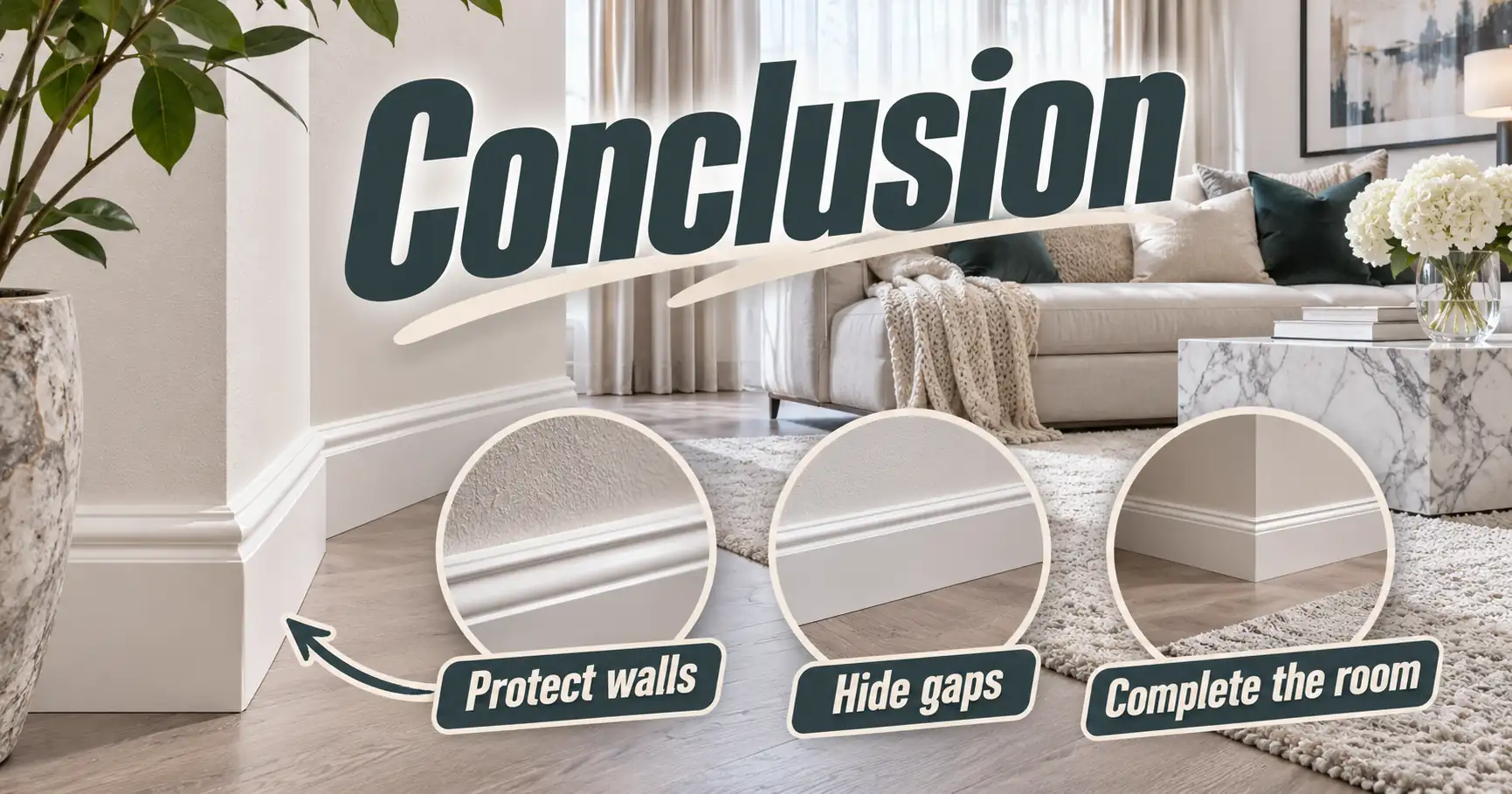
Skirting boards are a crucial part of interior design. They protect walls and cover imperfections at the bottom of walls and enhance the overall ambience of your space.
Tags: Wall Skiritng