7 Common Wall Cladding Installation Mistakes to Avoid in Dubai
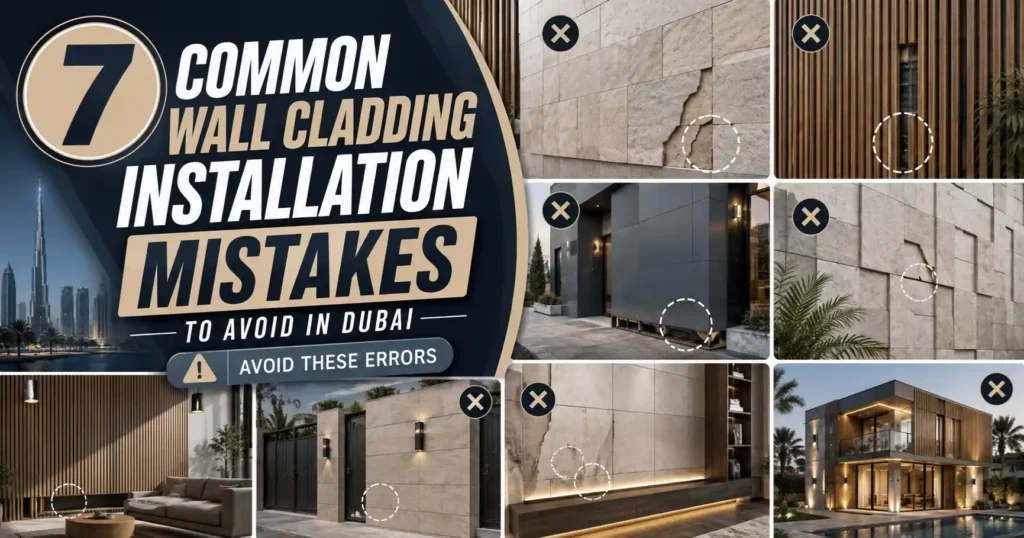
A plain wall can look amazing once cladding goes up. But if it’s fitted the wrong way, it can crack, peel, or warp within a year. In Dubai, this risk is even higher. Learning these common wall cladding installation mistakes now can save you money and stress later.
More homeowners, architects, and developers are choosing cladding for their walls. This includes villas, apartments, and commercial buildings. It happens across the whole city, from downtown homes to sites all over the UAE. It looks good. It protects the wall underneath. It also adds real value to a property. But the local climate does not forgive shortcuts.
The heat here is extreme. The sun is strong. There is a lot of dust too. Add in humidity and big temperature changes between day and night, and materials come under real stress. They expand and contract. Adhesives dry out too fast. Sometimes they never cure properly at all. Poor sealing lets moisture creep in. Many installation problems start with skipped prep work. Once that happens, issues show up fast. They also cost money to fix.
This guide covers the 7 most common mistakes we see here. It explains why they happen. It also explains what to do instead. Maybe you want exterior cladding for a villa. Maybe you want interior panels for your home. Either way, this guide can help.
What Is Wall Cladding and Why Does It Matter in Dubai?
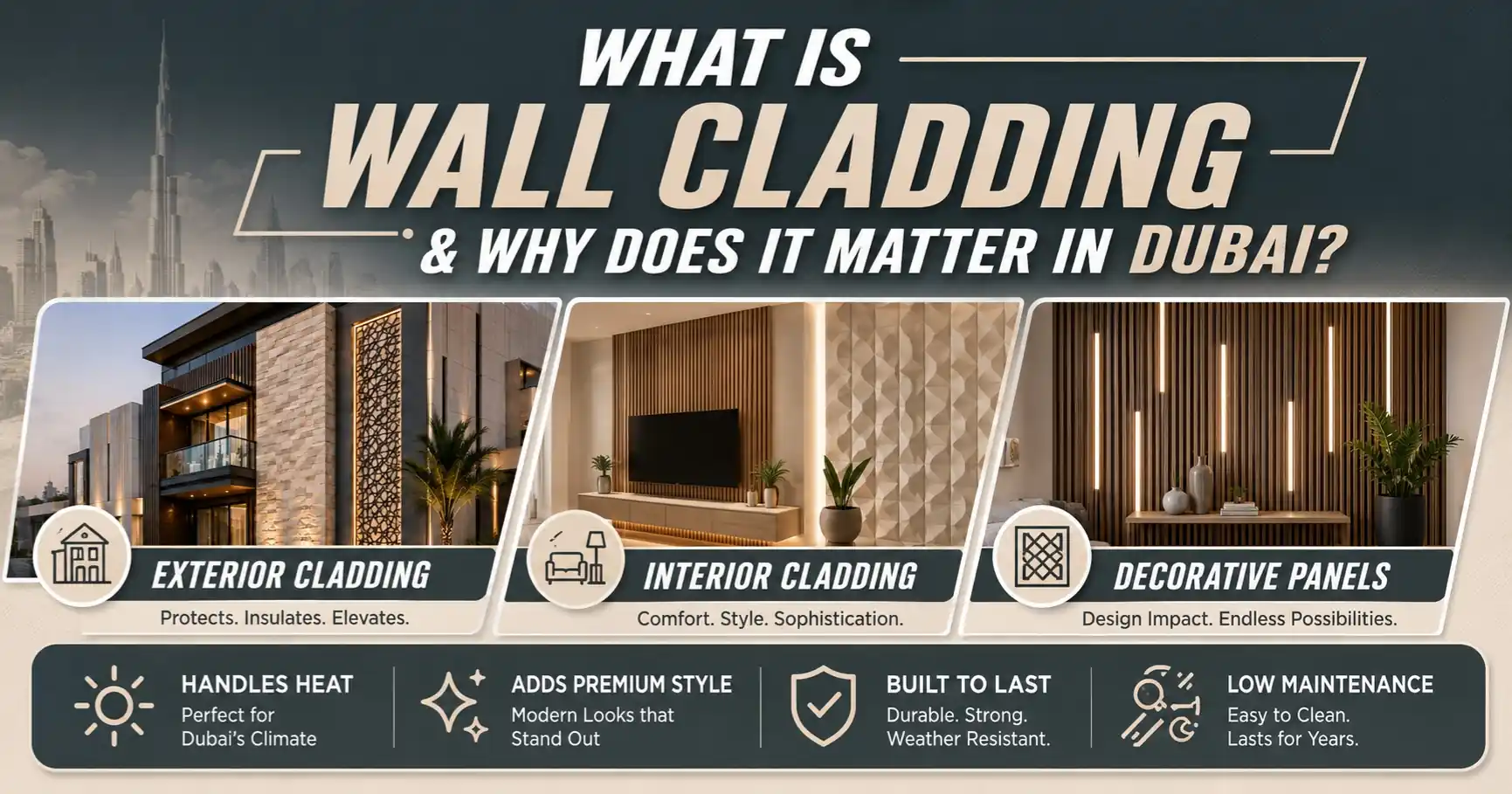
Wall cladding is a layer of material fixed onto a wall. It sits on top of the wall’s structure. It is not part of the wall itself. Think of it as a protective skin for the building.
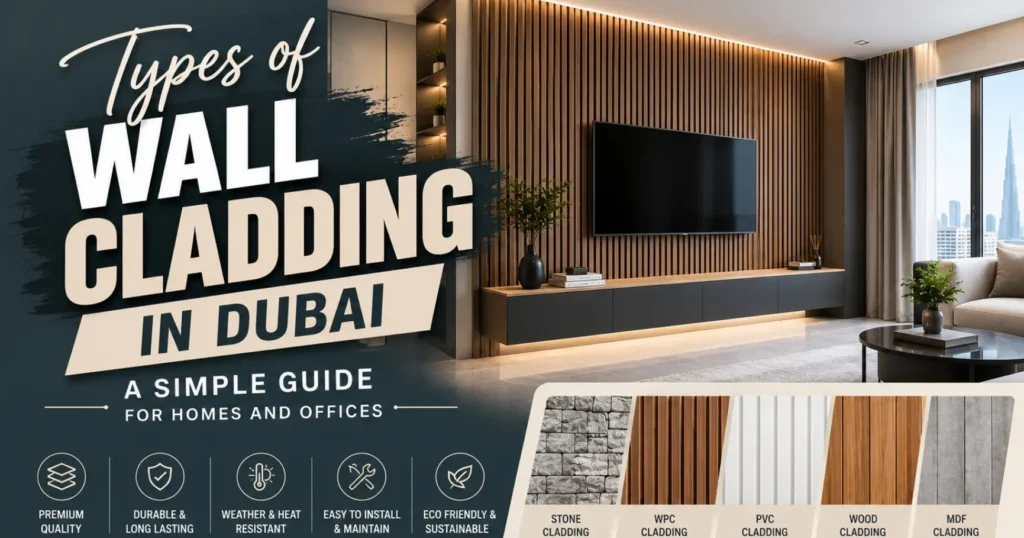
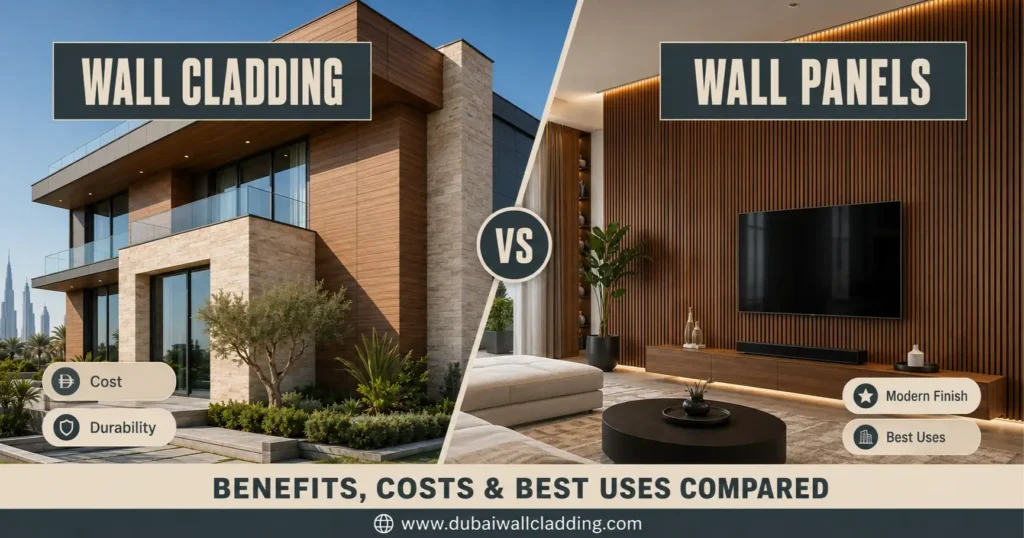
There are two main types. The first is exterior cladding. This covers the outside of a building. It protects the structure from sun, rain, dust, and changing temperatures. Common materials include natural stone, fiber cement, and weather resistant boards. The second type is interior panels. These go inside homes, offices, and hotels. They include wood panels and PVC wall panels. Decorative panels are also popular for feature walls in bedrooms, living rooms, and bathrooms.
Cladding has become popular across villas and commercial properties. There are a few simple reasons for this. It gives a wall a clean, modern look. It protects the structure from heat and moisture. It also lasts much longer than plain paint, with real durability built in. On top of that, it cuts down on repainting costs. It can even hide uneven or damaged surfaces underneath.
| Wall Cladding Type | Best Use | Main Benefits |
|---|---|---|
| Exterior Cladding | Villas, buildings, commercial properties | Weather protection, curb appeal |
| Interior Cladding | Living rooms, offices, hotels | Premium appearance, easy upkeep |
| Decorative Panels | Feature walls | Modern design, personality |
Choose the right material. Fit it correctly. Do both, and cladding pays for itself with a long-lasting, high-quality finish. Install it poorly, and it becomes a repair bill that keeps coming back. Installation quality matters just as much as the material itself.
The 7 Mistakes to Watch Out For
Mistake 1: Choosing the Wrong Material
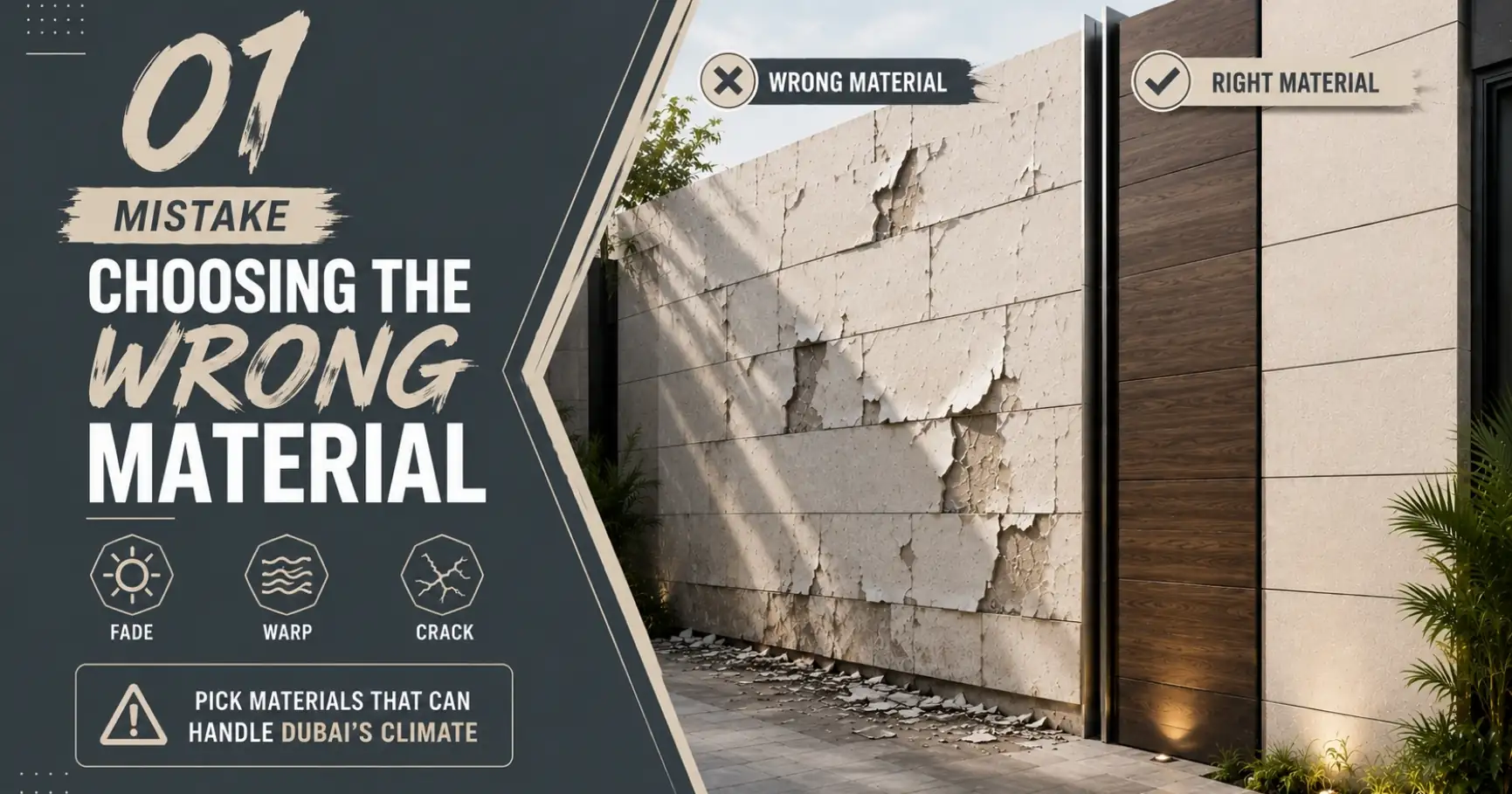
Many people pick a material because they liked it in a photo. They don’t check if it can handle the local climate. This is an easy mistake to make. It is also an expensive one to fix later.
Outdoor walls here face strong sun for most of the year. Some materials fade, warp, or become brittle under that much heat and UV exposure. A material that works well in a cooler country can fail here within a couple of summers. Colors fade. Panels warp. Joints crack. Panels can even pull away from the wall as they expand and contract.
Match the material to where it will go. For outdoor walls, weather resistant options work best. These include fiber cement, aluminum composite panels, or treated natural stone. Indoors, PVC and wood panels work fine, since they don’t face direct sun or rain. A good supplier will guide you toward panels rated for outdoor use, not just the cheapest option. Take a look at what we stock for outdoor walls to see what holds up well here.
Mistake 2: Skipping Proper Surface Preparation
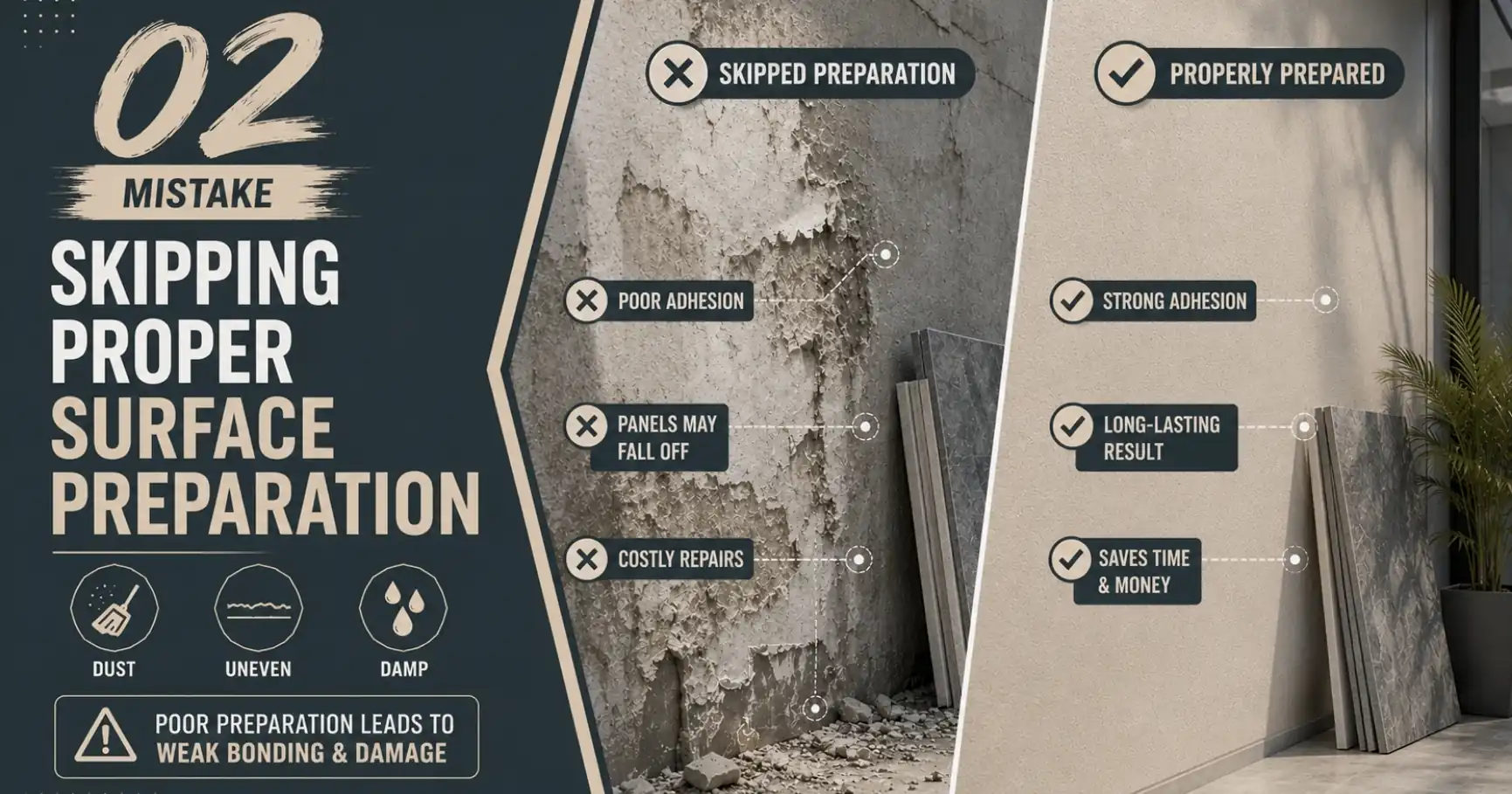
It’s tempting to skip straight to fixing panels onto the wall. But the prep work is what really decides how long cladding lasts. Done right, it can last five years or even fifteen.
Dust here settles into a fine layer of grit on walls. This happens even indoors. If panels or adhesive go onto a dusty, uneven, or damp surface, the bond is weak from day one. This usually shows up later. You might see bulging panels. Sections may come loose after a few months. The surface can also look uneven, catching light badly and looking unfinished.
Clean the wall first. Level it. Let it dry fully before any panel goes up. Patch any cracks. Remove loose plaster. If there has been recent plumbing or painting work nearby, give the wall extra time to dry out completely.
Mistake 3: Ignoring Proper Waterproofing
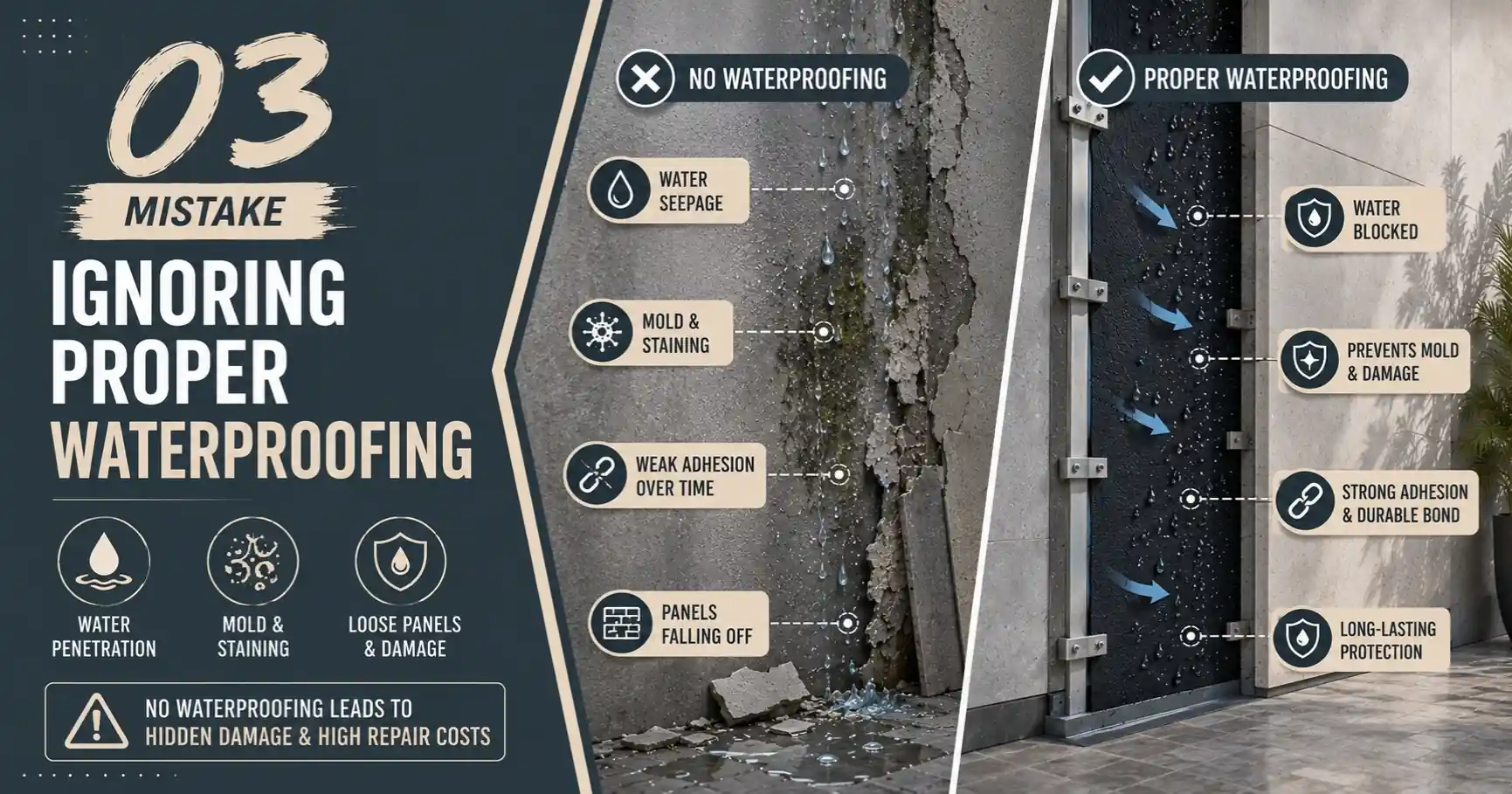
Dubai is not a rainy city. But it does get humidity, condensation, and the occasional heavy downpour. This can catch people off guard. This step often gets skipped because people assume dry weather means no water risk.
Without a waterproof membrane behind exterior panels, moisture can sneak in. It comes from humidity or a rare rainstorm. This moisture gets trapped between the panel and the wall. It has nowhere to go. Months later, this shows up as mold, staining, or a musty smell. The adhesive weakens over time. Eventually, the panels start to come loose.
Add that membrane, or a sealant, behind exterior panels before installation. Make sure all joints and edges are sealed properly. This stops water from sitting against the wall. It matters even more for bathroom panels or any wall near a water source.
Mistake 4: Poor Panel Alignment
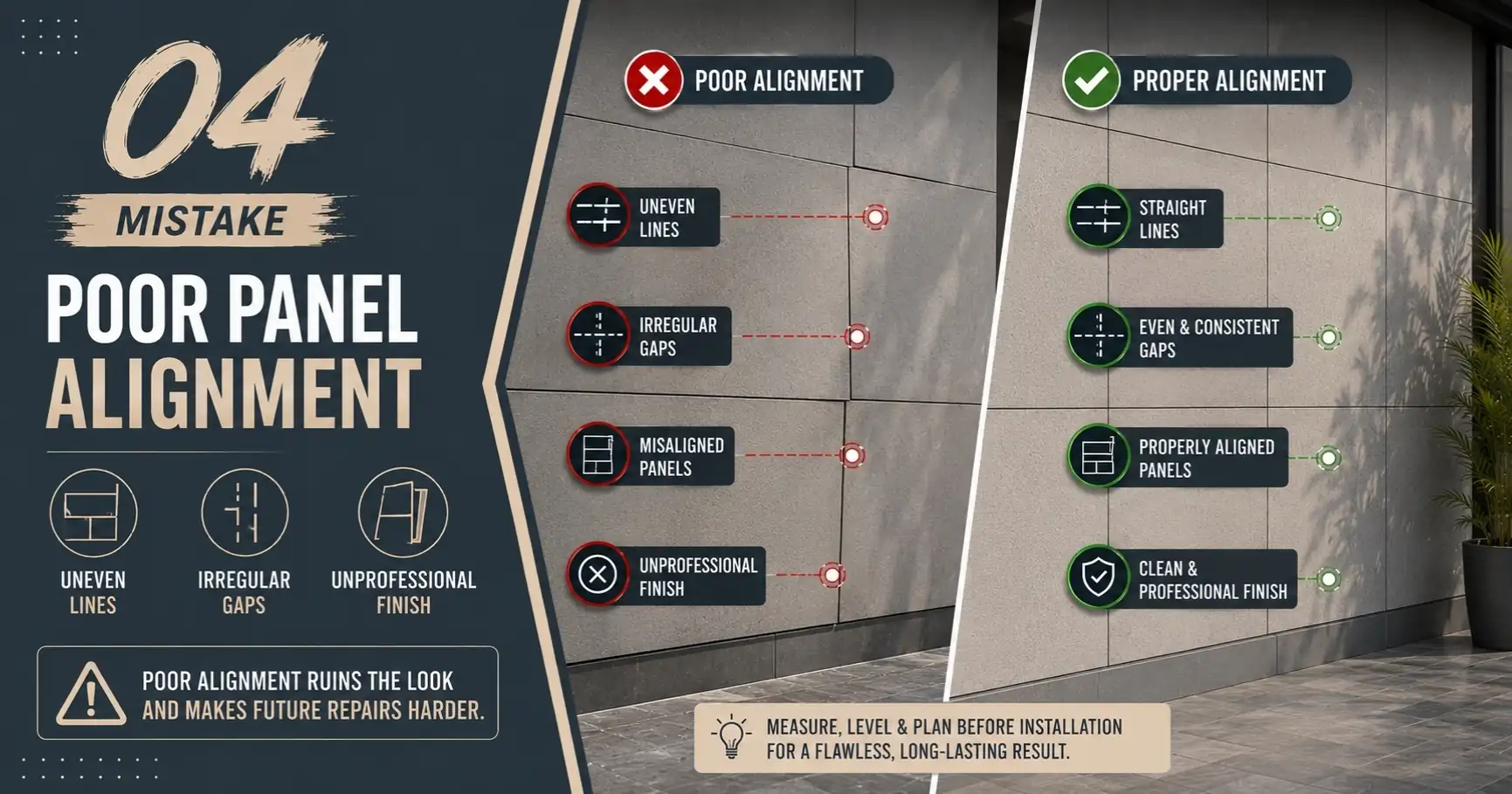
Installation looks simple once it’s up. But straight lines and even joints take careful measuring. Rushed jobs often skip this step to save time.
When panels aren’t aligned properly, the gaps end up uneven. The joints don’t line up from row to row. The whole wall can end up looking slightly off. You may not be able to say exactly why, but it just looks wrong. This kind of poor installation also makes future repairs harder. A replacement panel won’t match a pattern that was never straight to begin with.
The fix is simple. Use a level line. Use consistent spacing guides too. Start from a proper point before the first panel goes up. Good installers measure the whole wall first. They plan the layout before they begin. They use methods suited to the material, instead of fixing panels one by one and adjusting as they go.
Common Cladding Problems and Solutions
| Problem | Cause | Solution |
|---|---|---|
| Cracks | Poor installation or no expansion gap | Professional fixing and correct gap sizing |
| Water leakage | Bad sealing or no waterproofing | Proper membrane and sealant |
| Panel movement | No expansion gap | Correct installation with room to expand |
| Fading or warping | Wrong material for outdoor use | Switch to a weather resistant material |
| Loose panels | Poor surface preparation | Clean, dry, level surface before fitting |
Mistake 5: Not Leaving Room for Expansion
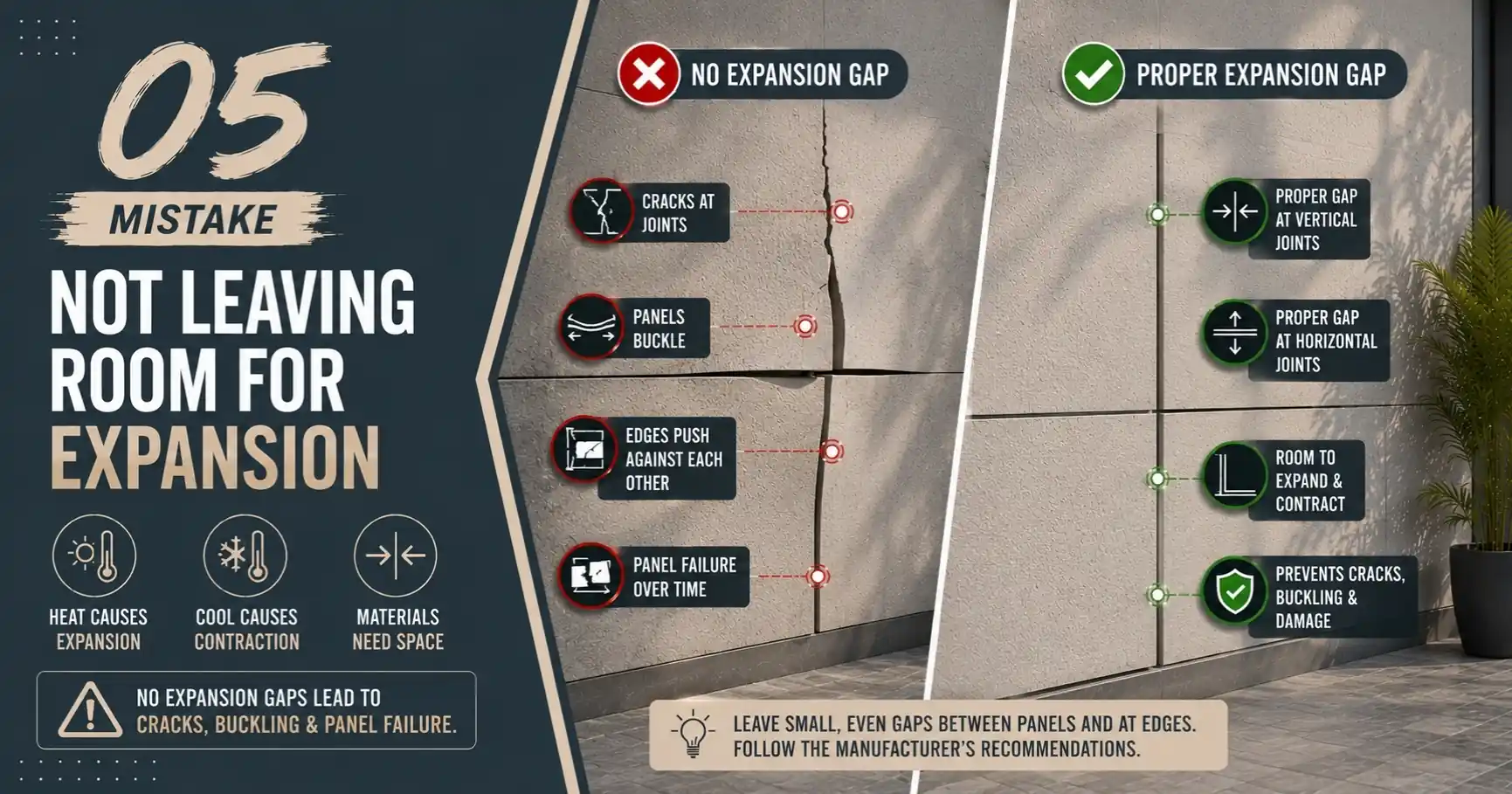
This mistake gets overlooked a lot. It’s tied directly to the local climate. Materials expand in the daytime heat. They contract again at night. Without gaps to allow for this movement, something has to give.
Skip the expansion gaps, and panels start to buckle. They can bow outward or crack at the joints. This happens as the temperature swings from a hot afternoon to a cool night. Over a year of this daily push and pull, tightly fitted panels put constant stress on the fixings and adhesive. Eventually, they fail.
Leave small, even gaps between panels and at the wall edges. Base the gap size on the manufacturer’s guidance for that material. This is a detail tied to good building practice. It’s a small thing, but it makes a real difference to how long the finish lasts.
Mistake 6: Hiring an Inexperienced Installer
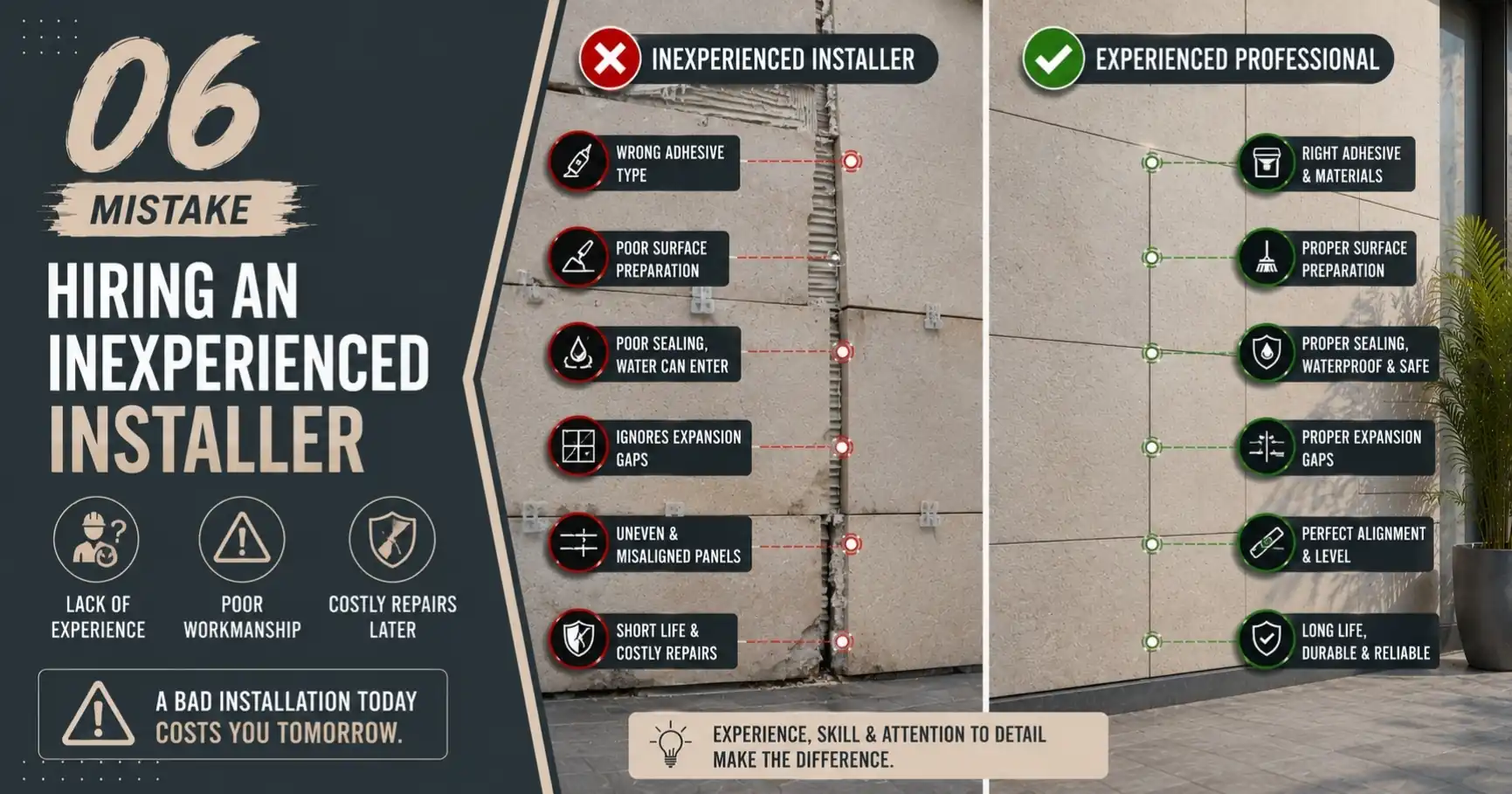
Installation can look like a job anyone with basic tools could handle. Because of this, some property owners hire the cheapest team they can find. This is usually where the real trouble starts.
An inexperienced crew might skip surface prep. They might ignore expansion gaps. They might use the wrong adhesive. They might even get the sealing wrong. None of these mistakes show up right away. They show up months later. By then, the wall usually needs to be stripped and redone. This ends up costing more than hiring a qualified team from the start would have.
Look for cladding contractors that Dubai property owners already trust. Check their track record of finished work. This could be villas near Business Bay or commercial towers elsewhere in the city. Ask to see photos of completed projects. Find out how long they have worked here. Check that they follow Dubai Municipality rules before you sign anything.
Mistake 7: Skipping Long-Term Maintenance
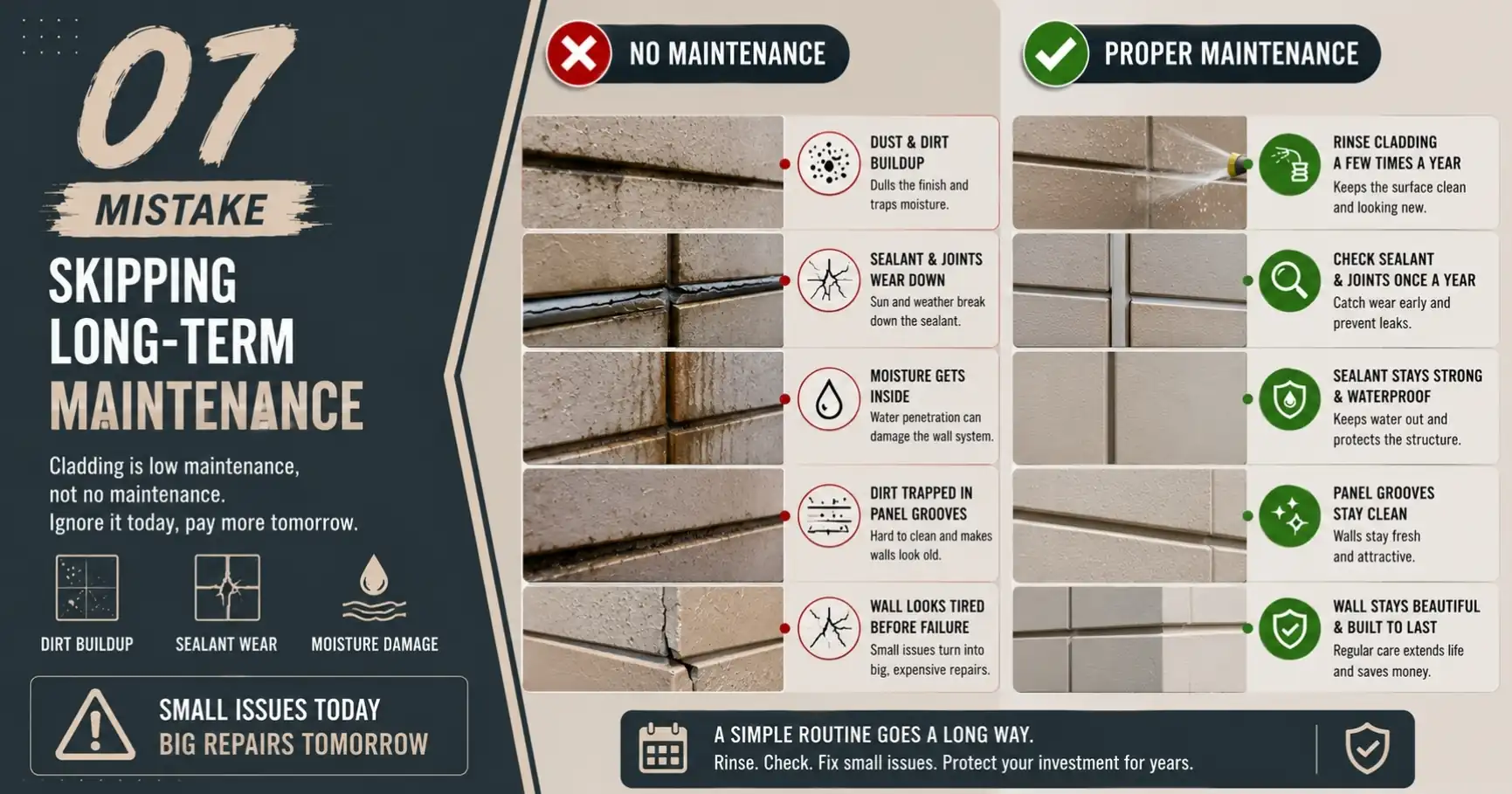
It is often marketed as low maintenance. Compared to plain paint, it is. But low maintenance does not mean no maintenance at all. Many owners install it and then never think about it again, until something goes wrong.
Dust builds up on exterior panels over time. Joints and sealant wear down after a few years in the sun. Small issues that go unchecked can turn into bigger, more expensive ones. Dirt gets trapped in the panel grooves. Sealant weakens and lets moisture in. The wall starts looking tired long before the material has actually failed.
A simple routine goes a long way. Rinse exterior panels a few times a year. Check the sealant and joints once a year too. Fix small cracks or gaps before the next hot season hits.
How to Choose the Right Wall Cladding Contractor in Dubai
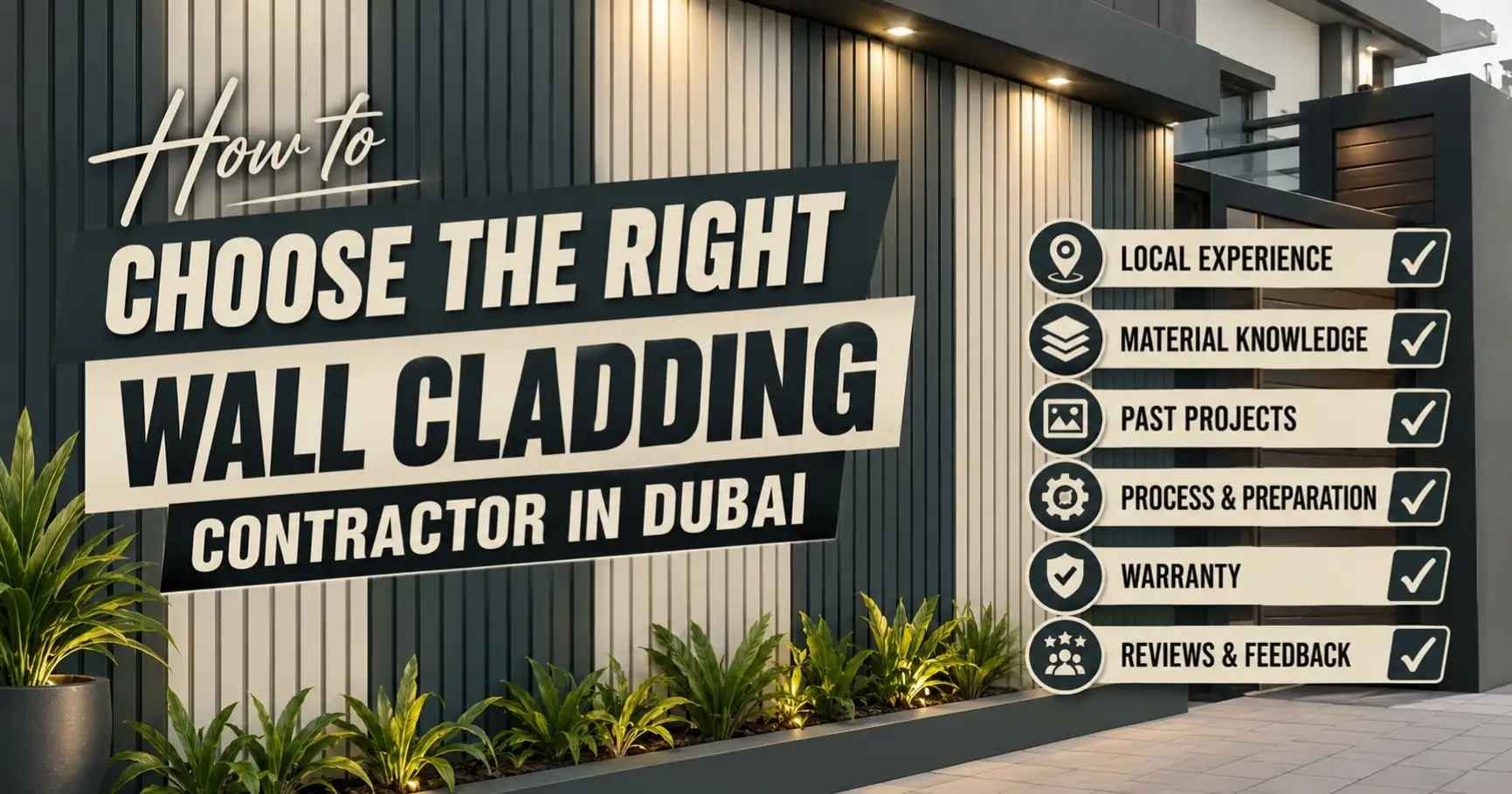
Picking the right installer matters more than picking the right material. Here’s what’s worth checking before you commit.
Local experience. A contractor who has already worked on villas and commercial buildings here knows which materials and methods actually hold up.
Material knowledge. A good contractor will explain the tradeoffs for your specific wall, whether it’s indoor or outdoor, instead of just pushing one product.
Past projects. Photos and site visits tell you far more than any sales pitch.
Process. Ask how they handle surface preparation, sealing, and expansion gaps. If they can’t explain this clearly, that’s a warning sign.
Warranty. A contractor who trusts their own work will back it with a warranty on both materials and labor.
Reviews. Honest feedback from other property owners is one of the most reliable signals you can find.
A good contractor usually walks you through all of this without being asked. They offer real solutions, not just a one-size-fits-all price. If a quote seems unusually low, ask what corners might be getting cut.
Why Professional Installation Is Worth It
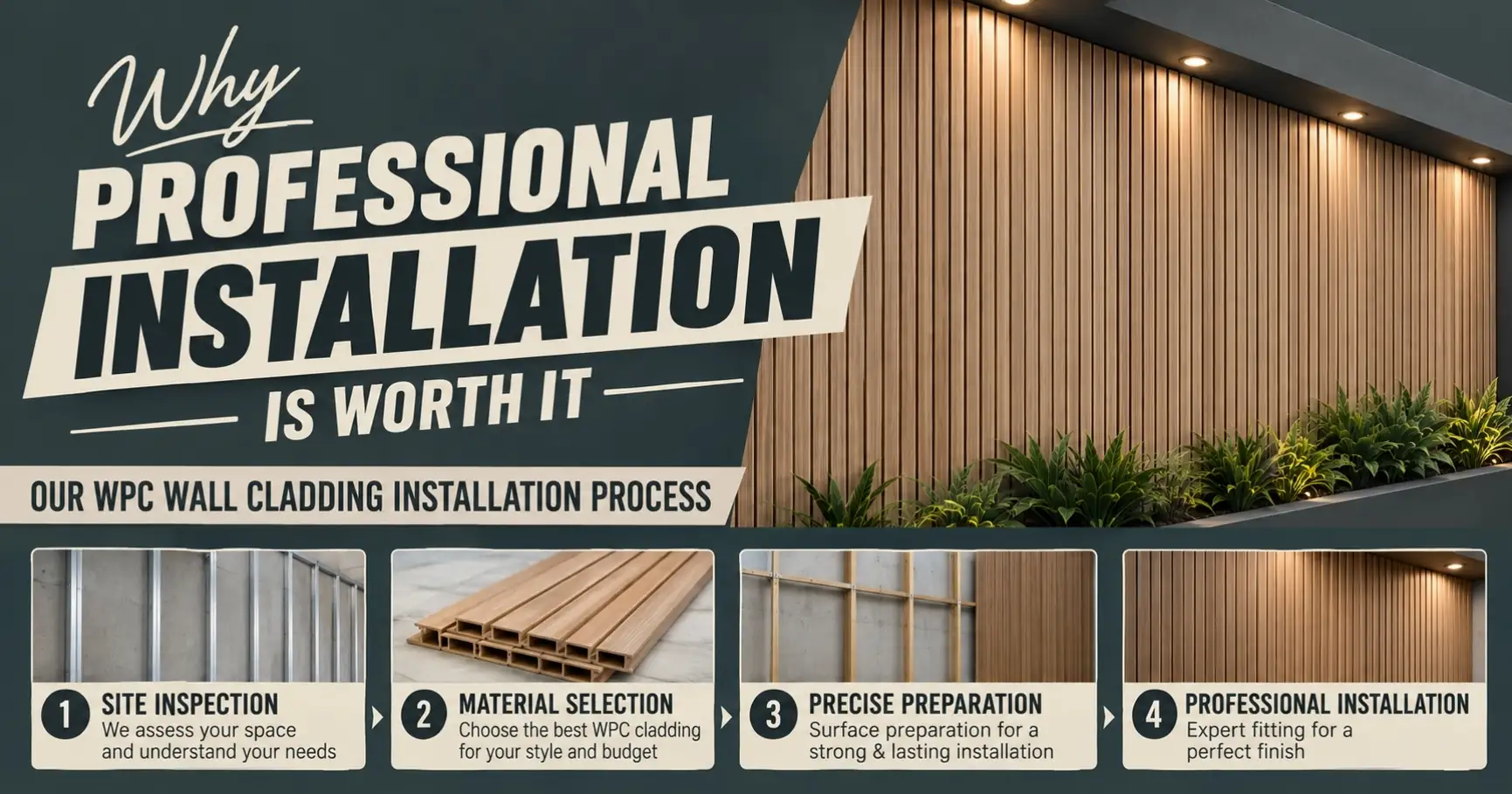
A professional job costs more upfront than a rushed DIY or budget install. But it lasts far longer. That changes the real cost comparison over time.
Panels installed properly stay aligned. Joints stay sealed. Colors fade evenly instead of in patches. Surface prep, sealing, and expansion gaps get handled right the first time. That means far fewer common mistakes to fix down the road. It also means fewer callouts, less disruption, and lower costs over the years.
At Dubai Wall Cladding, we’ve supplied and fitted panels across thousands of homes and commercial spaces in the UAE. We’ve seen firsthand which methods hold up to local weather and which ones don’t. We’re not the only option out there. But we do focus on getting the basics right: proper material selection, solid surface prep, and installation built for the heat and humidity here. If you’re weighing modern designs for a villa, or planning an interior refresh, take a look at our wall panels or see everything we offer. For a quote or a home visit, get in touch with us.
Frequently Asked Questions
Q: What’s the best wall cladding material for Dubai’s weather?
Weather resistant materials work best. This includes fiber cement, treated natural stone, and aluminum composite panels. They handle the heat and dust well. For exterior projects, skip anything not rated for direct sun. It will fade or warp faster.
Q: Can cladding go on any type of wall?
Most walls can support it. But the surface needs to be clean, dry, and structurally sound first. Poor surface preparation is one of the most common reasons it fails early. This is true no matter what kind of wall is underneath.
Q: How long does installation take?
A single room can often be done in one to three days. A full villa exterior might take one to two weeks, depending on size and material. Proper sealing and expansion gaps add a bit of time. But they help you avoid expensive repairs later.
Q: Does wall cladding need maintenance in Dubai?
Yes, though not much compared to paint. A few rinses a year for exterior panels helps a lot. Add an annual check on sealant and joints, and small issues stay small.
Q: How do I find a reliable cladding contractor in Dubai?
Look for proven local experience. Find someone who can clearly explain their process. Ask for photos of past projects. Check if they offer a warranty. Reviews from other property owners are also a strong sign of quality.
Conclusion
Cladding can genuinely transform a property in Dubai. But this only works when it’s installed with the local climate in mind. The right material matters. Proper surface prep matters too. So does sealing, correct alignment, expansion gaps, and an experienced installer. A bit of ongoing care helps as well. These are the things that decide if a cladding system lasts for years, or needs redoing within months. Get them right from the start. Your walls will stay protected and good-looking through every summer here.
Tags: Wall Cladding