
Wall Moulding Design Ideas for Every Room in Your Dubai Home
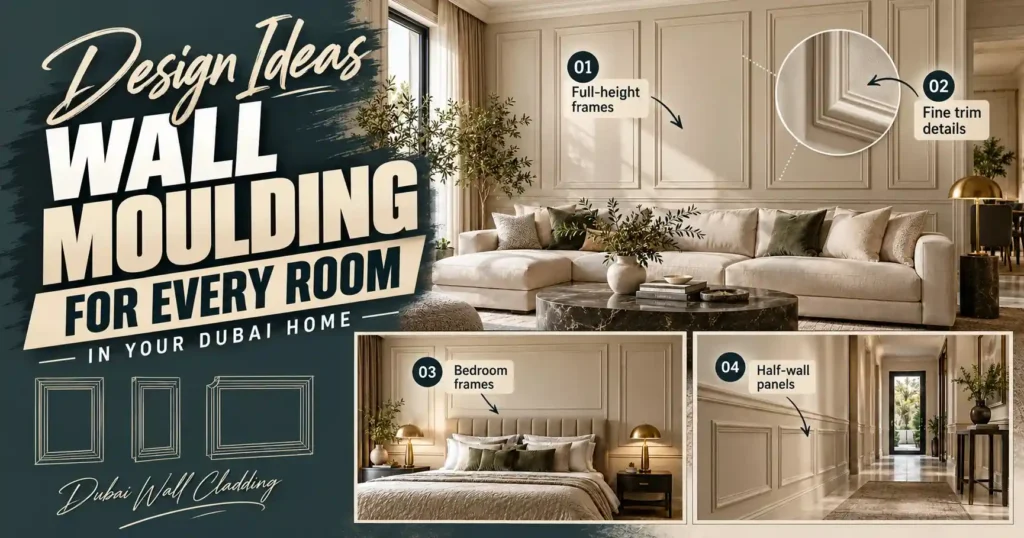
A plain wall can look unfinished. A few neat frames can fix that. Here is how to pick the right ones for each room.
You may have a nice sofa, soft light and a good rug. Yet the wall behind them still feels empty. More furniture will not fix it. A simple frame on the wall often will.
Wall moulding does this job. It uses thin strips of trim to make frames, borders and lines on a wall. In a small flat, one slim frame may be enough. In a villa, you can run the same design through the hall and up the stairs.
This guide goes room by room. Start with the room you use most. Then repeat a few details in the other rooms. Your home will feel like one space.
What Is Wall Moulding?
Wall moulding is trim that is fixed to a wall. The strips make a shape, like a box or a line. Shops also call it wall trim or wall molding. It is all the same thing.
Moulding is not the same as a full panel. With moulding, the wall stays mostly plain. The trim adds the detail. Panels cover more of the wall.
Fluted wall panels have straight grooves. 3D wall panels have a raised pattern. Wood wall paneling covers the wall with boards. You can see these styles in our wall panels in Dubai range. You can also browse our wood wall paneling page.
Not sure which one you need? Read our guide on wall cladding vs wall panels.
Wall Moulding Ideas for Living and Dining Rooms
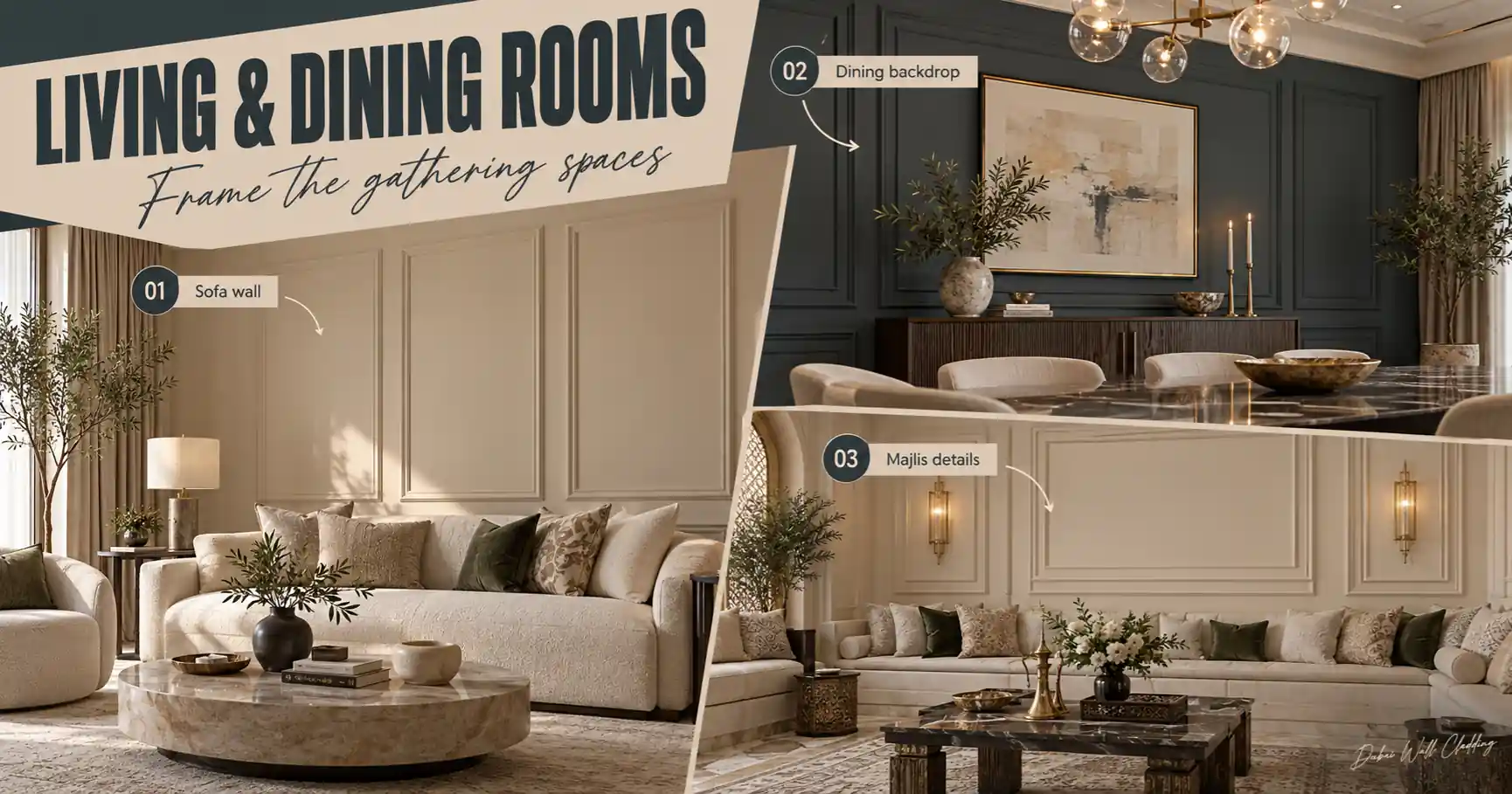
1. Frame the Sofa Wall With Simple Boxes
Start with where the sofa sits. One wide frame in the middle works well behind a big sofa. Add a smaller frame on each side. You can also use three equal boxes if the wall is even.
Leave a gap above the sofa back. A line that hides behind the cushions looks like a mistake. Use masking tape first. Then stand at the door and sit in your usual seat. Check it from both spots.
The same colour on trim and wall gives a calm look. Warm beige feels soft. A deep grey-green shows the lines more. Want more texture? Try living room wall panels inside the frames. Our living room wall cladding page has some options.
2. Give the TV Wall a Clear Outline
A simple TV wall design needs one big frame around the screen. Keep the sides plain. Check the TV bracket, sockets and wires first. The frame must fit around them.
Planning a media wall design with shelves? Draw the cabinet and the trim together. Do not leave thin boxes beside a door. Keep the air gaps the TV maker asks for. If you need a new unit, see our custom furniture service.
You will find many TV wall ideas online. Pick one and keep the rest calm. A living room TV wall design looks best when it is not too busy.
3. Use the Dining Wall to Frame Art or a Mirror
A dining room often needs just one good backdrop. Try a large box behind the sideboard. Put a painting or a mirror inside it. Centre it on the furniture, not on the room.
For a bolder look, pick a darker wall and paint the trim to match. For a softer look, use beige trim on an off-white wall. Both go well with most chairs and curtains.
4. Keep Majlis Details Wide and Balanced
In a majlis, let the seats guide the pattern. Wide frames above the seating look calm. Many small boxes can look messy. A double border suits a classic room. A single clean line suits modern furniture.
Leave space for what you want to show. Art, lamps and patterned cushions all need room. If every surface has detail, make the trim simpler.
Bedroom, Kids Room and Home Office Ideas
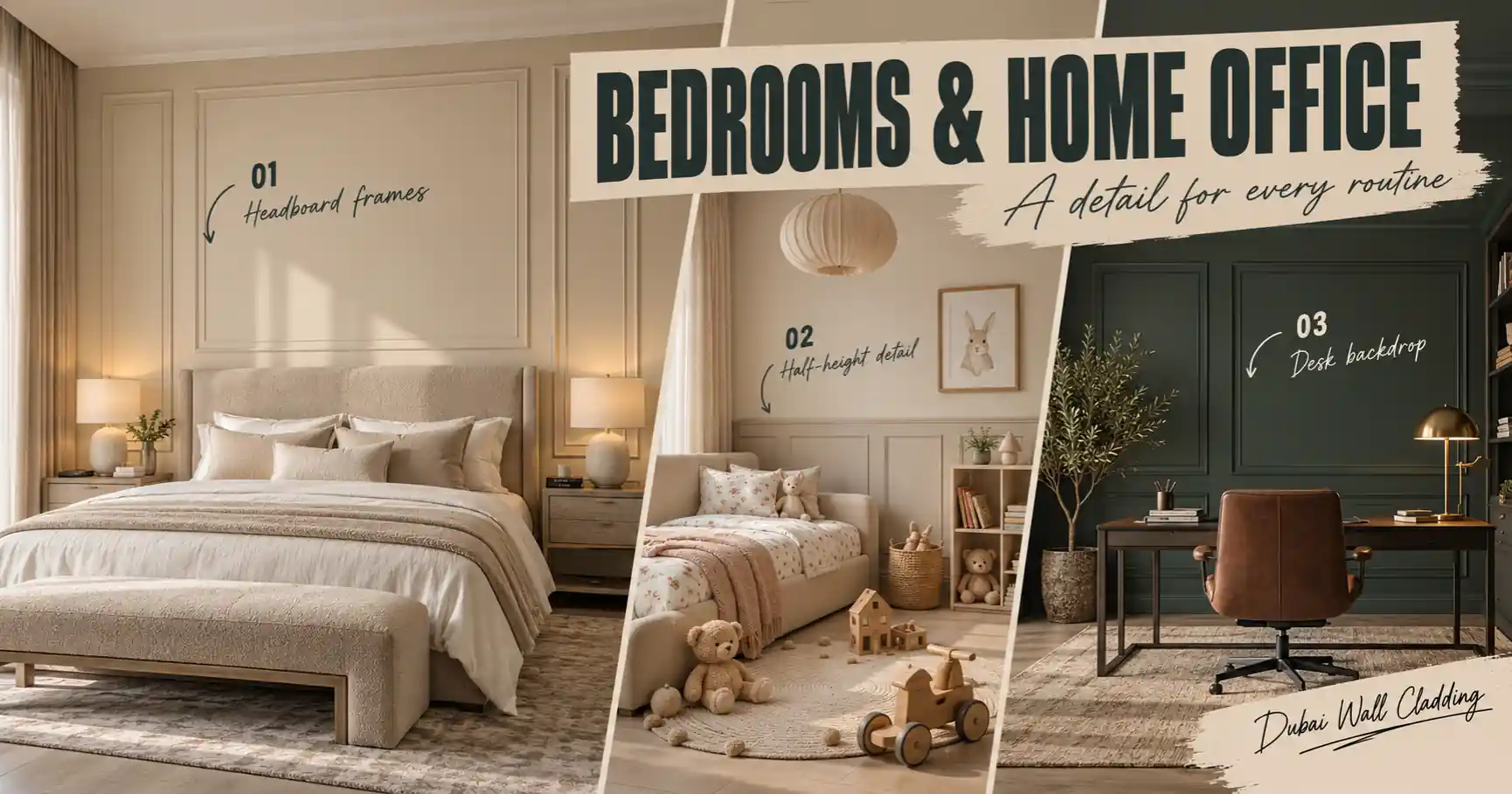
5. Build the Bedroom Layout Around the Headboard
Plan around the bed, the side tables and the lights. One large frame behind the headboard keeps things simple. On a wide wall, add a narrow frame on each side. Line up the bedside lights with care.
Measure the real headboard. Its height matters as much as its width. You do not want a curved headboard to cover half a line. You also do not want a switch to land on the trim.
Soft beige, off-white or muted green can blend in well. Test a paint sample with the lamps on. Then test it in daylight. For a full-wall finish instead, see our bedroom wall cladding options.
6. Use a Lower Painted Section in a Kids Room
Half-height frames add colour without too much detail. Keep the upper wall plain. Or add wallpaper above the rail for a pattern. Set the dividing line with the bed, shelves and window sill in mind.
Pick a paint that is easy to wipe. Choose a trim with a simple shape. Trim alone does not stop scuffs. The paint does most of that work.
7. Make the Home Office Wall Look Planned
Two or three wide frames behind a desk make a tidy video call backdrop. Dark slate looks good with beige chairs or pale wood. If the room gets little daylight, test a sample first.
Check the view on your camera before you decide. A frame edge across your head looks odd on screen. It may look fine from the door.
Hallways, Stairs, Kitchens and Bathrooms
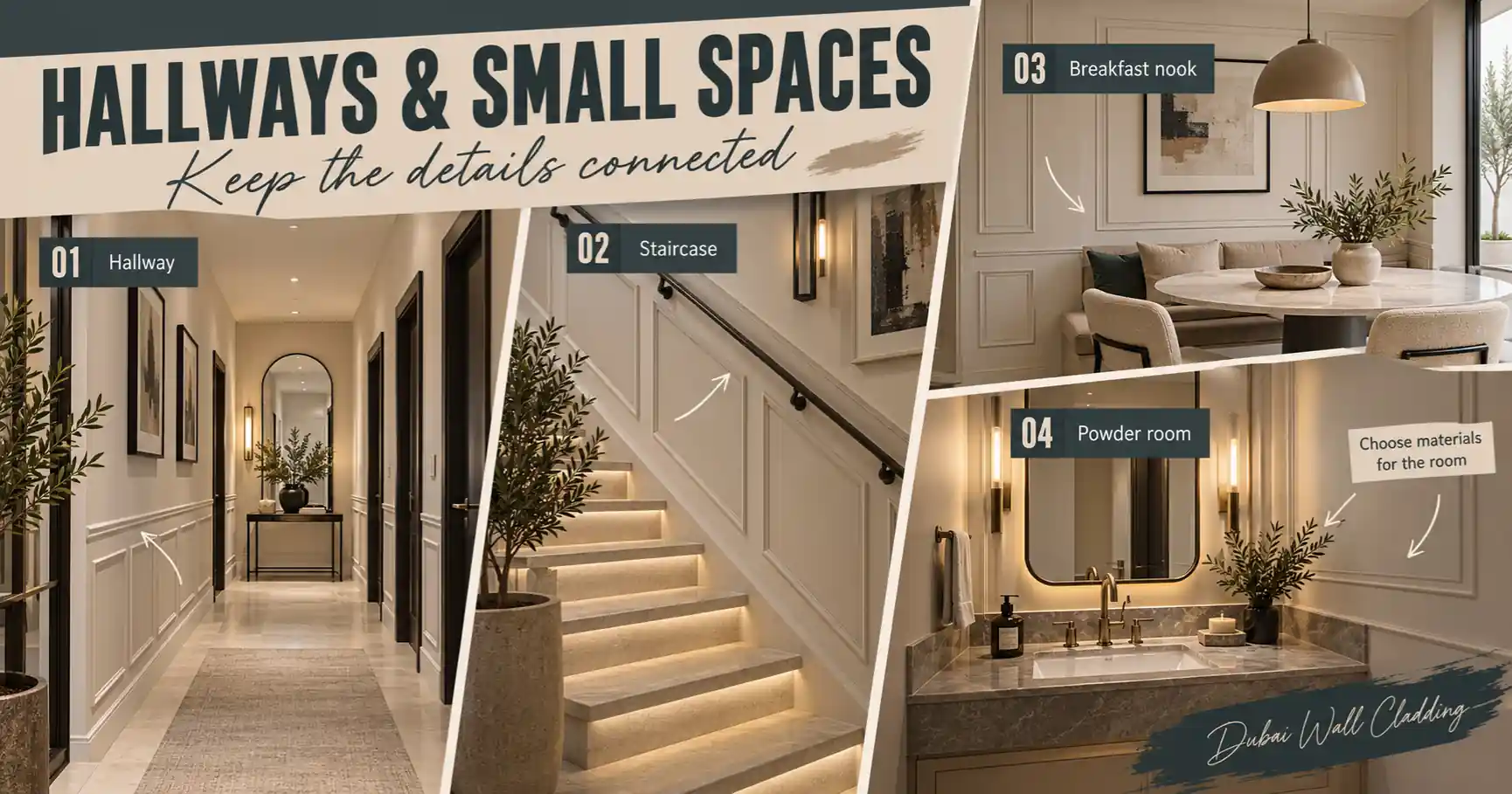
8. Give the Hallway One Clear Line
A rail with simple frames below it can link the entrance, the hall and the landing. In a narrow hall, use a slim trim. A thick one will feel heavy near the doors.
Plan where each frame ends. Keep the same gap beside each door frame. That looks better than forcing every frame to be the same width. Match the height with your wall skirting too. Check that a console table, mirror and switches still fit.
9. Let Stair Frames Follow the Slope
On a staircase, slanted frames can match the rise of the steps. The landing needs its own drawing. If you just extend the slope, the corner may look odd.
Keep the trim you used downstairs. Only change the shape. Ask the installer to mark the full pattern before any cutting. Rails, lights and switches must stay easy to use.
10. Keep Kitchen Detail Away From the Splashback
In an open kitchen, start with the wall near the dining table. It links the kitchen to the living area. The wall behind the hob or sink is a harder place for trim. It gets heat, steam and splashes.
Ask for a material, glue and finish that suit the spot. A product that says moisture-resistant is not always fine for heat. It may not suit repeated splashes either.
11. Treat a Powder Room and a Shower Differently
Simple frames around a powder room mirror can look great. A shower is another story. It gets direct water all the time. For those walls, a full bathroom wall cladding system is the safer pick.
Our PVC wall cladding is a common choice for damp rooms. Ask the installer how the joints and edges will be sealed. Never assume that waterproof trim makes the whole wall waterproof.
Which Material Should You Choose?
Pick the material after you know the room. Also think about how fine the shape must be. MDF, timber, polyurethane, PVC and gypsum are not the same. Ask for a real sample before you decide.
| Material | Best Use | Main Benefits |
|---|---|---|
| MDF | Painted frames in dry rooms | Smooth finish and usually a lower cost |
| Timber | Painted or natural-grain trim | Real wood look and a strong feel |
| Polyurethane | Curved and detailed shapes | Light weight and sharp detail |
| PVC | Damp areas such as bathrooms | Handles moisture better than MDF |
| Gypsum | Classic ceilings and carved designs | Rich detail for formal rooms |
MDF needs a note of its own. Moisture-resistant MDF is not waterproof. It is fine for a humid room, but not for a wet wall. You can see our range of MDF wall cladding if you want to compare finishes.
PVC wall panels and PVC trim look different from each other. Ask to see a finished joint. If you plan to paint it, ask to see a painted sample too. A sample shows the edge much better than a photo.
Want a wider view of your options? Read our guide to types of wall cladding in Dubai.
How to Plan Spacing, Colour and Fitting
Start With the Free Wall Space
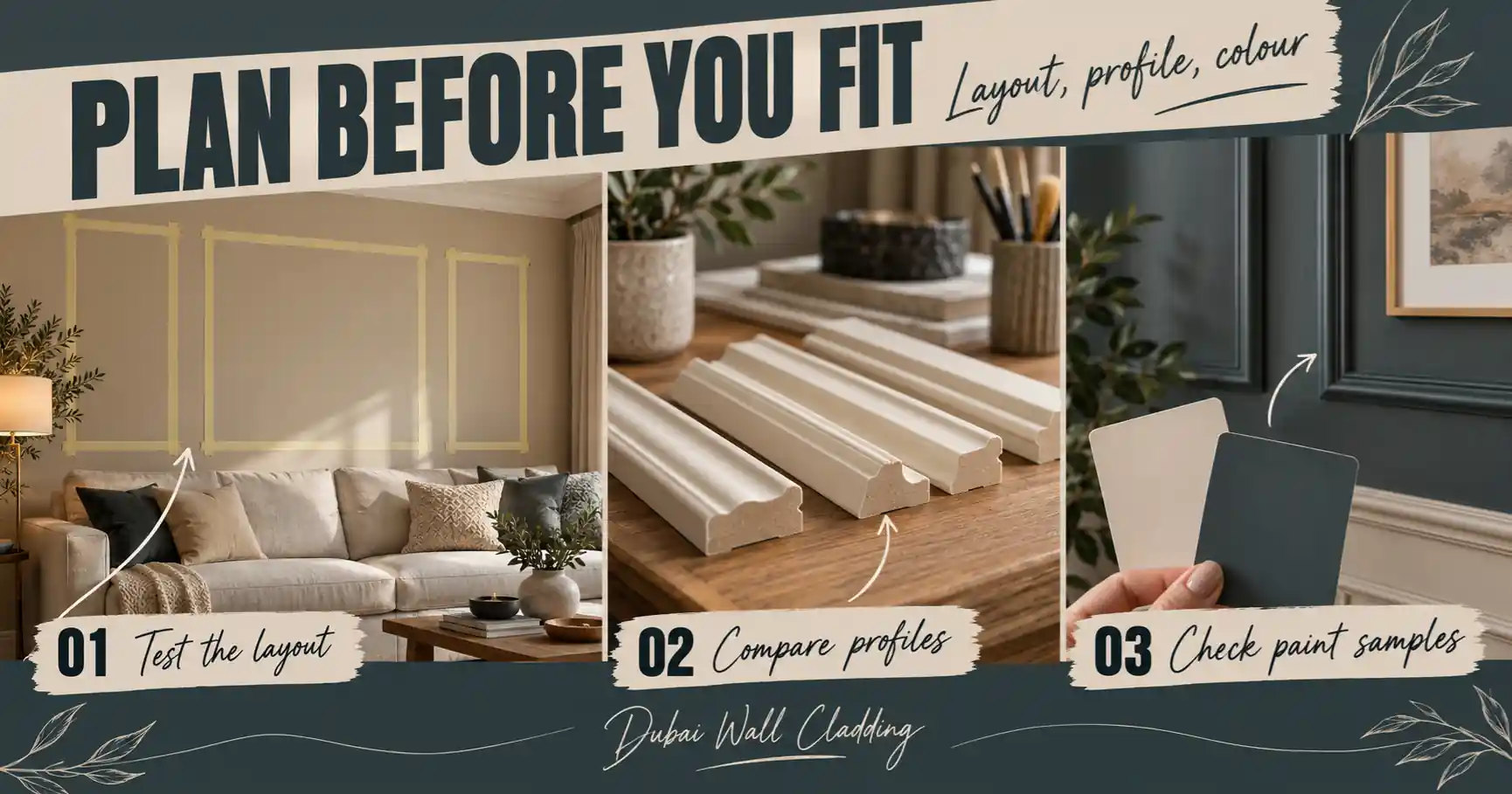
Measure the wall. Then mark the skirting, doors, windows, sockets and fixed furniture. The free space between them matters more than the room width. Good wall panel design follows the same rule. Keep every shape in scale with the wall.
No single gap suits every home. Use masking tape and test the layout at full size. If a frame feels tight beside a door, change the plan before you buy any trim.
Work Out the Trim Length
For a plain box, add up its four sides. The sum is 2 × (width + height). A frame 1 metre wide and 1.5 metres high needs 5 metres of trim. Three of them need 15 metres.
This is a planning guide, not an order size. Tell the supplier if your sizes are for the outer edge or the inner edge. Cuts and stock lengths change how much you must buy. A double border needs its own sum for each line.
Choose Colours That Work Through the Home
You can repeat the same trim and still change the paint. Try beige in shared rooms. Use a softer tone in bedrooms. Pick a deeper shade for the study. A screen colour is not a paint code, so hold real samples against the floor and curtains. Look at them by day and at night.
Need a painter as well? See our wall painting service.
Check the Wall First
Loose paint, a rough surface or damp should be fixed before any trim goes up. Ask the installer what prep is included. Ask which glue suits your wall. Read our list of common wall cladding installation mistakes before you start.
Renting a flat? Ask your landlord first. Also ask building management if there are work rules. Do this before you book the installer.
What to Ask for in a Dubai Quote
The price depends on more than wall size. A wall with many small frames needs more cuts and joints. A wall with a few big boxes needs fewer. Tricky corners, wall repairs and painting also change the job.
Ask for a written quote. It should list the trim type, the layout, the length of trim, the prep, the fixing, the joint filling and the paint. Ask if cleaning, site protection and VAT are in the price. Then compare quotes that cover the same work.
For wall moulding in Dubai, send a clear photo of the wall and rough sizes. Add a design you like. The final price comes after we confirm the layout and the wall. Prices for wall cladding Dubai wide, or for full panels, are not the same as moulding prices. Our wall cladding cost in Dubai guide explains that side of the budget.
Doing a bigger home update? Our renovation experts can look at the whole job. You can also view our portfolio for finished work.
Questions Before You Start
Can You Add Moulding to a Painted Wall?
Often, yes. The old paint must be firm. It must also work with the glue. The installer should test it. Loose or peeling paint needs repair first.
Will It Make a Small Room Look Busy?
It can, if the trim is thick or there are too many frames. Try fewer, larger frames. Paint them the same colour as the wall. Judge the taped layout with the furniture in place.
Should Every Room Have the Same Design?
No. Repeat a trim, a colour or a border to link the rooms. The frame sizes should suit each wall. A bedroom headboard and a staircase need different layouts.
How Do You Clean Wall Trim?
Follow the care steps for the material and the paint. Dust it gently. Use a damp cloth only if the finish allows it. Do not leave water in the joints or on raw edges.
Is Wall Molding the Same as Wall Moulding?
Yes. They are two spellings of one word. Moulding is the British spelling. Molding is common in American listings. Wall trim and wall trim molding mean the same thing too. Compare the material and the shape, not the spelling.
Start With One Wall You Want to Improve
Pick the wall. Place the furniture. Test a simple frame layout with tape. When the shape feels right, choose the trim and the paint. Then bring the idea to the other rooms.
Want help with your layout? Contact Dubai Wall Cladding with wall photos, rough sizes and a picture you like. Ask the team to confirm the material and the work before you say yes.
Tags: Wall Moulding